
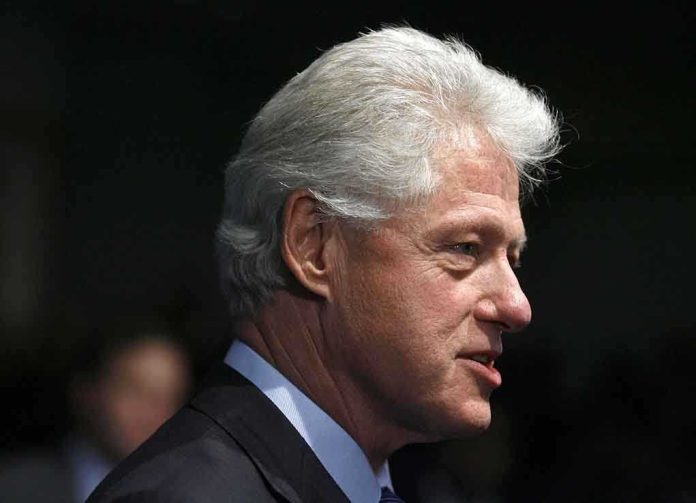
Bill Clinton’s demand for the full release of Epstein files is raising eyebrows and questions about what might be lurking in the shadows of political power.
Story Overview
- Bill Clinton is urging the DOJ to release all remaining Epstein files.
- Clinton accuses the Trump administration of hiding something.
- Photos of Clinton with redacted women have already been released.
- The Epstein Files Transparency Act mandates complete DOJ disclosure.
Clinton’s Demand for Transparency
Former President Bill Clinton has publicly demanded that the U.S. Department of Justice release all remaining files related to Jeffrey Epstein. Clinton, through his spokesperson Angel Ureña, has accused the Trump administration of deliberately withholding these files to protect “someone or something.” This statement follows a partial release of documents that included photos of Clinton in Epstein’s company, though the images were redacted to obscure the identities of accompanying women.
The partial disclosure of these files has sparked controversy, especially since they came out after the DOJ missed a full disclosure deadline. The Epstein Files Transparency Act, passed in 2025, requires the DOJ to release all documents related to Epstein, yet significant portions remain undisclosed. Clinton’s insistence on making these files public aligns with his stance of transparency, as he positions himself as having nothing to hide concerning his past associations with Epstein.
The Context of the Epstein Files
The Epstein files are part of a larger investigation stemming from Epstein’s 2019 federal sex trafficking case, which involved underage girls. These documents include flight logs, court records, and other materials that could potentially implicate various high-profile individuals. The Epstein Files Transparency Act was introduced by Representatives Thomas Massie and Ro Khanna and later signed into law by President Trump, despite his initial opposition. The Act mandates that all files be made public, yet the DOJ’s phased release approach has been criticized for not meeting deadlines.
Bill Clinton’s connections to Epstein have been a point of contention for years. Clinton has flown on Epstein’s jet multiple times and attended events in Epstein’s company. However, he claims to have severed ties once Epstein’s criminal activities were exposed. The latest release includes images of Clinton with redacted women and records of dinners with Epstein and other notable figures like Mick Jagger.
Political and Legal Implications
The demand for file release has political ramifications. Clinton’s call for transparency could be seen as an attempt to clear his name, as well as to question the motivations behind the current administration’s handling of the files. The DOJ, under Deputy Attorney General Todd Blanche, maintains that the phased release is necessary due to the volume of materials and the need for thorough review.
Bipartisan support for the full release underscores a rare unity in Congress aimed at exposing Epstein’s network and holding those involved accountable. However, the Trump administration faces accusations of cover-up, with lawmakers like Senator Ron Wyden claiming the delay continues to shield high-profile figures.
Public and Political Reactions
The public response to the partial release and Clinton’s demands has been mixed. Some observers see Clinton’s call for transparency as a genuine effort to dispel rumors, while others suspect it could be a strategic move to control the narrative. The controversy also reignites discussions about accountability among the elite and the implications of Epstein’s network on political and social structures.
As the DOJ continues its phased release, the pressure mounts for a complete unveiling of the files. The ongoing scrutiny and upcoming depositions of both Bill and Hillary Clinton add another layer of complexity to the situation. The stakes are high, and the unfolding events will likely influence public perception of the involved parties and the broader political landscape.