
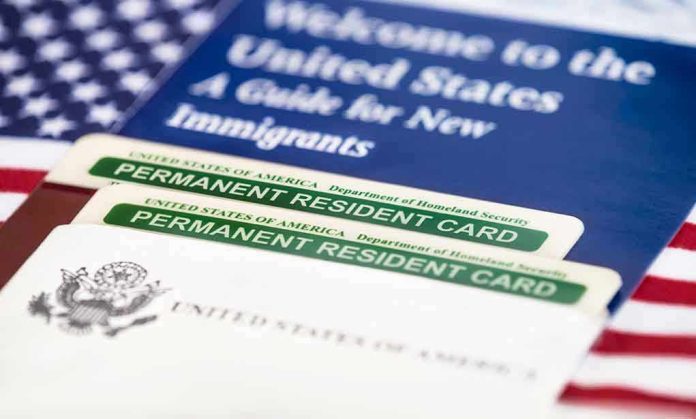
Washington just turned the green card from a finish line into a round-trip ticket home, and the real story is what that means for families, employers, and the rule of law.
Story Snapshot
- New policy pressures many green card hopefuls to leave the United States and apply from their home country.
- The administration frames the shift as fraud prevention and “enhanced vetting.”
- Critics warn of processing freezes, extra costs, and forced family separations.
- Conservatives must decide whether this is smart scrutiny or bureaucratic overkill that hurts the law-abiding.
What A Green Card Is Actually Supposed To Do
A green card is not a lottery prize; it is permission to plant roots. Lawful permanent residents can live anywhere in the United States, work for almost any employer, start a business, and eventually apply for United States citizenship after several years of residence.[3] Most earn that status the hard way: through a sponsoring family member or employer who files the initial petition, then a gauntlet of background checks, medical exams, and interviews handled by United States Citizenship and Immigration Services or a United States consulate abroad.[1][3]
Family-based applicants usually start with Form I-130, where a United States citizen or permanent resident proves a real, legal relationship and enough income to avoid dumping costs on taxpayers.[1][3] Employment-based applicants often need a job offer, a labor certification, and Form I-140 filed by a United States employer.[3][5] After that comes the adjustment of status step inside the country or consular processing abroad. For years, many who were already here lawfully could finish the process without leaving, which reduced disruption for families and businesses.[1][3][5]
The New Departure Rule: How The Ground Just Shifted
The Trump administration now wants to flip that script. The new guidance tells many foreigners who are in the United States on temporary visas that if they want a green card, they must leave and apply through a consulate back home, with only narrow “extraordinary circumstances” exceptions.[2] Agency statements stress that temporary visitors are supposed to come for a limited purpose and leave, not use a short-term visa as a stepping-stone to permanent residence.[2] On paper, that sounds like basic enforcement of the original deal.
Behind the press releases sits a broader tightening campaign. Legal analyses describe expanded background checks, more in-person interviews, new medical exam timing rules, and re-review of pending green card cases.[4] Some reports describe temporary freezes on categories like refugees and asylees seeking green cards, while officers rerun fingerprints and data through expanded Federal Bureau of Investigation systems.[3][5] The administration and its allies fold all of this into a simple narrative: enhanced vetting, closing loopholes, and making sure no one “slips through the cracks.”[4]
Burden Or Backbone? Sorting The Competing Claims
Supporters argue that shifting people out of the United States for consular processing gives the government a cleaner, more controlled environment to vet applications. From that perspective, asking someone to return home for an interview, a medical exam, and new biometrics is a reasonable price for the privilege of permanent residence. They also see value in a single, tough standard: everyone follows the same route, and temporary visas stop being quiet back doors into green cards.[2][4]
Critics counter that the lived reality looks less like targeted fraud control and more like mass bureaucratic drag. Reports describe green card applications paused or re-interviewed, medical exams repeated under new rules, and cases denied when paperwork does not match fresh requirements.[1][3] Immigration advocates point to families suddenly facing months of separation while a spouse waits abroad, and employers losing key workers mid-project because the employee must leave the country for uncertain consular processing.[3][5] These are not cartel leaders gaming the system; they are people who followed the existing rules and then had the finish line moved.
A Conservative Lens: Security, Sovereignty, And Fair Dealing
Conservatives rightly insist on secure borders, serious vetting, and a system that rewards those who play by the rules. The administration’s emphasis on integrity and fraud prevention aligns with those instincts. When the government uses extended background checks and tighter public charge rules to keep out those likely to become long‑term burdens on taxpayers, that reflects basic common sense and respect for limited public resources. No serious conservative wants rubber‑stamp green cards.
L.J. D'Arrigo, leader of Harris Beach Murtha's Immigration Practice Group, says the Trump administration's most recent immigration move means most foreign nationals temporarily in the U.S. seeking a green card will have to return to their home country to apply at a U. S.…
— Harris Beach Murtha (@HarrisMurtha) May 22, 2026
The question is whether this particular departure requirement targets abuse or simply piles stress onto the very people doing things legally. Forcing a law‑abiding applicant to quit a job, pull children from school, buy last‑minute tickets, and sit abroad for months while paperwork crawls does not obviously strengthen sovereignty. When government changes the rules mid‑process, freezes cases, and leaves families in limbo, it starts to look less like principled enforcement and more like administrative punishment without a clear individual reason.[3][5]
Where This Likely Heads Next
This fight will not end with a policy memo. Lawyers will challenge denials, pointing to inconsistent implementation and sudden rule changes. Congress will hear from employers who cannot keep talent and families who feel ambushed after years of compliance. The administration will emphasize any fraud it uncovers through the new process, while downplaying the many routine cases bogged down by added steps. The core debate will remain the same: how far can a government go in tightening procedures before it stops rewarding, and starts punishing, those who tried to follow the law.
Sources:
[1] YouTube – Trump admin changes requirements for green cards …
[2] YouTube – Trump’s BIG changes to Green Card Adjustment of Status …
[3] Web – Trump Immigration Policy Changes – USAHello
[4] Web – Immigration: Recent Changes and New Regulations | Insights
[5] Web – Trump Administration Abruptly Stopped Processing Green Card …