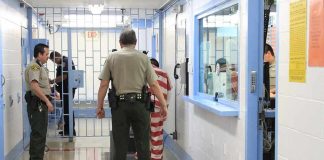
Before the headlines turned her into a symbol, she was just a hungry Texas child with a disability, alone in a house, nibbling birthday cake and dialing strangers for help.
Story Snapshot
- A disabled girl in Fort Bend County allegedly survived on birthday cake while left home alone for days.
- She finally contacted law enforcement herself, asking not for rescue, but for food.
- Her mother now faces felony charges for abandoning or endangering a child with intent to return.
- Media outrage is loud, but the legal and moral questions underneath are far more complicated.
The child who asked police for food, not rescue
Reporters describe deputies in Fort Bend County tracing a call from a child with a disability who said she was alone and needed food, not drama, not attention, just something to eat. Court records say she had been alone for about two days by the time she reached out, and investigators believe she might have remained undiscovered even longer if she had not made that call. That single detail exposes both her desperation and her surprising resourcefulness, despite a documented mental deficiency.
According to the probable cause affidavit, the girl had a mental impairment that could limit her awareness of danger and surroundings. Yet she navigated a device with limited connectivity long enough to reach the sheriff’s office. Deputies reportedly had to use patrol cars and emergency sirens so she could figure out where help was coming from, because the system could not immediately pinpoint her location. This was not a Hollywood rescue; it was a clumsy, improvised effort between a confused child and a stretched system.
How birthday cake became the shorthand for neglect
Public outrage did not ignite around statutes or affidavits; it ignited around birthday cake. A Law&Crime report highlighted that the girl survived “on birthday cake” while her mother allegedly worked and left town for days, crystallizing a complicated neglect case into a single, sticky image.[5] A local detective later confirmed to Houston media that she had been living off birthday cake in the home during her time alone. That framing fits perfectly into a prosecution theory of deprivation, but it tells only part of the story.
The same coverage notes that prosecutors are pursuing two separate felony cases tied to two different incidents. Court records show the mother, identified as Philippi Angela Walker, is charged with abandoning or endangering a child with intent to return, a state jail felony in Texas. That “intent to return” language matters; it separates a parent who disappears forever from one who leaves a child alone believing, rightly or wrongly, that nothing terrible will happen. The law does not excuse it, but the distinction matters for both punishment and public judgment.
What investigators say about travel, disability, and risk
The affidavit referenced by Houston reporters claims investigators believe the mother was out of the country in Honduras during one of the incidents, leaving the child alone at the residence while she traveled abroad. If proven, that is a very different scenario than a parent misjudging a long work shift. The same filings describe the child’s disability as a “mental deficiency,” suggesting she may not fully grasp danger or know how to seek help in most circumstances. That combination—international travel and a vulnerable child alone—is precisely why prosecutors feel confident pressing felony charges.
The Independent’s coverage leans heavily into the abandonment narrative, emphasizing that the girl was disabled, alone for days, and surviving on cake before contacting police for food. Law&Crime echoes that framing, describing the mother as having left the girl to survive on birthday cake while she worked a nine-hour shift and left the home for “days.”[5] None of this is a final verdict, but the pattern of details across outlets tracks closely with the underlying affidavit as summarized by local television reporting. The legal process, however, is still pending.
Why emotionally charged neglect cases demand caution
Cases like this slot neatly into a larger pattern: child welfare stories tend to reach the public first through emotionally loaded images—here, cake crumbs and a frightened phone call—long before full court records or defense explanations surface. The Fort Bend case is already being compared, explicitly or implicitly, with other Texas abandonment stories: a newborn left in a plastic bag, a six-year-old dropped at a Dallas hospital, an autistic teen left near dumpsters.[2] The risk is obvious: over time, distinct facts blur, and every struggling parent gets painted with the same brush.
From a common-sense, conservative perspective, two truths can coexist. First, a society that will not protect children—especially those with disabilities—from obvious, foreseeable harm is a society in decline. Second, a legal system that hands the microphone almost exclusively to the state and the most sensational headlines, while the defense remains silent or buried in dockets, encourages moral panic rather than measured accountability. Responsible citizens should insist on both child safety and due process, not one at the expense of the other.
Where accountability, mercy, and policy collide
Texas already treats abandonment and endangerment as serious crimes, as shown in other cases where children left in hospitals or dangerous conditions immediately trigger involvement from the Texas Department of Family and Protective Services and the courts.[2][5] The Fort Bend prosecution fits that pattern: the child is now in the system, the mother faces two felony cases, and judges will eventually sort through travel records, digital evidence, and medical assessments. Nothing about that process is soft on neglect.
The harder question is the one the headlines ignore: what conditions lead a mother to think an eight-year-old with a mental disability can be left alone for days, with cake as the primary food source? That is not a defense; it is a policy question. Americans concerned with both family stability and limited government should ask whether we prefer to intervene before a child dials 911 for dinner, or only after the fact with handcuffs, cameras, and another child folded into an overburdened foster system. The answer will determine whether this girl’s story becomes a turning point or just another shareable outrage.
Sources:
[2] YouTube – The Back Story: ‘Baby Jessica’ falls into a well in Midland, Texas
[5] YouTube – Autistic girl allegedly abandoned near garbage dumpsters now …