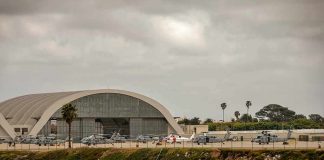
The president of the United States was quietly moved off his $400 million “palace on wings” because U.S. security officials believed Iran and its proxy fighters might be hunting for Air Force One itself.
Story Snapshot
- Trump left the NATO summit in Turkey on the older, battle-tested Air Force One after a reported Iran-linked threat.
- Secret Service and other security officials, not Trump, are reported to have pushed the last-minute switch for safety.
- The new Qatari-gifted jet lacked some proven defenses of the legacy plane, raising questions about its readiness.
- Trump publicly denied a security motive and said he sent the new plane ahead so U.S. troops could see it.
Why the President Suddenly Switched Planes
Reporters traveling with President Trump watched something rare in modern White House history: a president stepping away from his shiny new aircraft and climbing back onto the old, scuffed workhorse that has carried commanders in chief through wars and crises for decades. Multiple accounts say this was not nostalgia. People briefed on the situation told major outlets that U.S. intelligence picked up a credible threat from Iranian proxy forces aimed at Trump and Air Force One as he left Turkey after the NATO summit.
Those sources say the United States Secret Service urged Trump to change planes once the threat picture came in. That alone should make any adult pause. The Secret Service does not casually tell a sitting president to abandon his brand-new, foreign-gifted jet unless the risk calculus shifts hard. According to these reports, the call was simple: when you are inside range of Iranian weapons and proxy networks, you use the bird whose defenses you already trust with your life.
Old Versus New: Security First, Optics Second
Here is the key detail that cuts through the noise: the older Air Force One is a hardened, American-built command post with long-proven missile countermeasures and secure communications, while the Qatari-donated jumbo was still in the middle of upgrades and did not yet match those defensive systems. Critics on the left and right can argue over optics all day, but common sense conservatives understand this: when the enemy might have you in their sights, you pick the platform that has already been tested under fire.
Reports out of the region say tensions with Iran had spiked again, with renewed strikes and talk of revenge attacks. That is the exact moment when serious security professionals stop worrying about how good the new jet looks on television and start asking hard questions about radar warning gear, decoys, and encrypted radios. Anonymous or not, the intelligence and security reporting lines up with how American protection details always think: in a hot zone, you default to the most proven shield, not the prettiest one.
Trump’s Public Story And The Built-In Ambiguity
Trump did not stand at the podium and say, “Yes, Iran scared me off my new plane.” That is not who he is, and conservatives would not expect him to hand Tehran a propaganda win. Instead, he told reporters he sent the new jet ahead to Britain so U.S. troops could tour it, and that he flew the old Air Force One “for old time’s sake.” When pressed on Iran, he said he was “number one on the kill list,” then moved on without clearly tying his answer to the plane switch.
That blend matters. On paper, his words create an alternative motive—showing off the new jet to the troops. But he also repeated that Iran wants him dead and did not flatly reject the idea that security played a role. For many right-leaning Americans, that sounds less like a lie and more like a deliberate dodge: acknowledge the danger, keep your bravado, and never let hostile regimes think they forced your hand. The problem is that this style, while politically understandable, leaves the media plenty of room to spin doubt around the official security story.
What We Know, What We Do Not, And What Common Sense Says
There are still blanks the public cannot fill in. No one has released the classified threat reports, the detailed Secret Service risk matrix, or the technical comparison chart showing exactly which defenses the Qatari jet lacked on that specific day. Some officials quoted in the press even downplayed parts of the intelligence, calling it less than fully credible. As usual, national security secrecy and anonymous leaks leave space for both real concern and suspicion of overblown media drama.
President Trump flew home from Turkey on an older Air Force One due to a credible threat from Iran. The newer Qatari-gifted jet lacks advanced defenses, prompting the switch. The Secret Service advised the change for safety, highlighting ongoing … https://t.co/VMFXw7zKRF pic.twitter.com/Dvf5fXMtj9
— NewsRadio WKCY – 107.9 FM (@newsradiowkcy) July 25, 2026
Yet when you strip away the spin, the picture is straightforward. Intelligence services and the Secret Service saw a sharper threat from Iran and its proxies as Trump prepared to launch from Turkey inside hostile range. They pushed him to ride the more heavily fortified, American-tested airframe for that leg. He agreed, then gave the public a face-saving, troop-focused explanation. From a conservative, common-sense view, that choice tracks: protect the president first, argue about airplane politics later. The open question is whether Washington will ever let voters see enough of the underlying evidence to fully trust the process.
Sources:
cbsnews.com, nytimes.com, defensenews.com, euronews.com, youtube.com, nbcnews.com