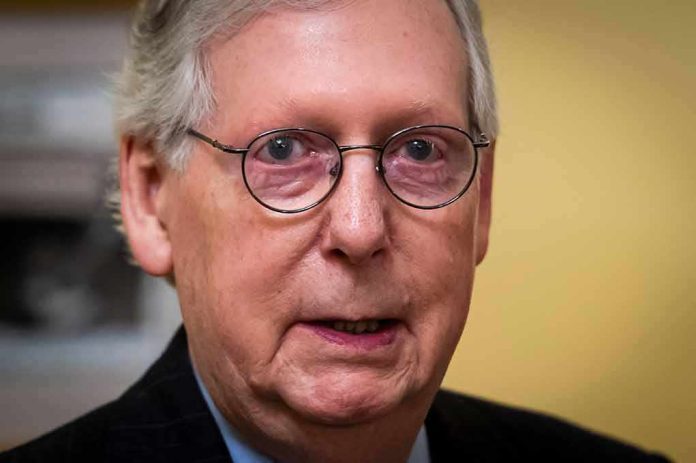
Mitch McConnell stepped back onto the Senate floor after three months away, and his very next choice sparked more noise than his return.
Story Snapshot
- McConnell returned to the Senate after a June hospitalization and rehab stay.
- He said he would cast his first vote since the fall and greeted colleagues.
- Photos and broadcast reports showed his first public Capitol appearance in months.
- The comeback reignited debate over age, duty, and fitness rules in Congress.
He Came Back, Said He Would Vote, Then Did
Senate Minority Leader Mitch McConnell arrived at the Capitol on Sept. 14, ending a months-long medical absence that began after a June fall and pneumonia. He announced that he planned to cast his first Senate vote since June and that he looked forward to seeing colleagues again. Reporters documented his return as his first floor appearance since hospitalization. A local photo gallery placed him walking into the Capitol for the vote, marking his first public sighting in over 90 days.
NPR and other outlets reported the timeline in simple terms. He was hospitalized on June 14 after a fall and brief loss of consciousness. He later entered rehabilitation. In early August, he left rehab to continue intensive physical therapy at home. His office said he would keep working with staff and plan his return. The Sept. 14 comeback matched that arc. The news hook was not only that he returned, but that he resumed voting on the floor the same day.
Why The First 24 Hours Fueled Uproar
Coverage did not dwell on the simple fact that he voted. Talk shows and social posts leaped to what his first move might mean for the fall agenda. When a senior leader reappears and quickly exercises power, the town reacts. That is Washington. Some observers focused on reports that he looked thinner and slower than before, and they questioned whether the return signaled full strength or only a narrow floor role. Those claims ride optics, not data, but they influenced the tone online.
The broader reason for the stir is structural. Congress has no standard fitness-for-duty process and no age limit. The Senate relies on members to judge their own capacity and on voters to pass final judgment at elections. That gap lets drama fill the space where a rule might sit. The same story repeats with each long absence. Staff keep offices running, and a member returns when ready. The institution absorbs the delay and keeps moving, even if key votes bottleneck.
Health, Duty, And The Rules We Actually Have
McConnell’s path fits the modern pattern. Senior lawmakers face real health events, step back, then return. The Senate’s rules do not force disclosures beyond what each office shares. That privacy norm respects individual rights, but it also leaves citizens guessing about capacity and schedules. The balance point is accountability at the ballot box and within party caucuses. Voters set the incentives; parties set roles; the chamber sets procedures. No law flips a switch when a senator gets sick.
Conservatives should care about two things here: results and representation. Results mean votes cast, bills moved, and oversight done. Representation means the people of Kentucky get their say through their elected senator. McConnell’s return advances both. He showed up and voted, which is the core job. Demands for blanket medical disclosures or forced retirements may feel clean, but they can violate privacy and invite partisan misuse. The Constitution sets high bars for removal for a reason.
What Matters Next For The Senate Calendar
The question is workload, not optics. Floor votes, committee work, and leadership meetings define capacity. His office previously said he would keep an intense therapy plan while resuming duties. That points to a steady, staged ramp-up rather than a sprint. If he maintains attendance and leads his conference through the fall agenda, the story shifts from health to outcomes. Washington rewards wins, not whispers. Watch the vote counts and the bill text; those tell you who is steering.
Mitch McConnell Makes Long-Awaited Return to Capitol Hill
After nearly three months out of the public eye, 84-year-old Sen. Mitch McConnell returned to the U.S. Senate on September 14, marking his first public appearance since a fall at his Washington home in June led to… pic.twitter.com/5GK3ZVOs8E
— Mighty News (@Mighty__News) September 16, 2026
One brief caveat applies, as some reports noted: staff limited certain video access on return day, which pushed audiences toward secondhand views and quick takes. That choice fed the noise. Yet the hard record is clear enough. He returned. He said he would vote. He cast that first vote. The rest is commentary. If this week brings a string of votes with him present, the uproar fades into the background hum that always greets a powerful figure’s first step back onto the stage.
Sources:
redstate.com, npr.org, 6abc.com, courier-journal.com, nypost.com, nytimes.com, abcnews.com, time.com, cnn.com, clashreport.com, wset.com