A smoke explosion and a collapsing roof turned a routine dinner hour into a four-alarm fight for survival in Williamsburg.
Story Snapshot
- Fire broke out just before 5:30 p.m. at 135 North Fifth Street in Brooklyn.
- The blaze spread through three adjoining restaurants and reached four alarms.
- Six firefighters suffered minor injuries; no serious civilian injuries were reported.
- A smoke explosion and a partial roof collapse forced a mayday and withdrawal.
What Happened On North Fifth Street
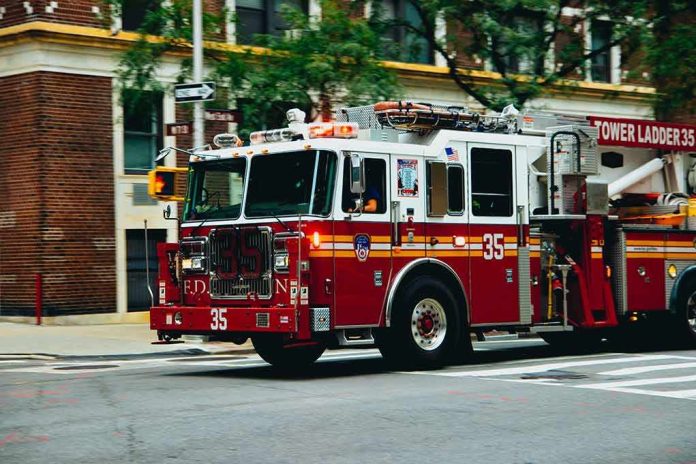
Firefighters arrived within minutes to a fast-growing fire at 135 North Fifth Street, between Bedford Avenue and Berry Street. Crews reported heavy smoke and fire inside a restaurant space identified by multiple outlets as Juliette Restaurant. The flames extended to two neighboring eateries in the same low-rise structure. Commanders quickly called extra companies as heat built and visibility fell. The response grew to four alarms, drawing more than one hundred firefighters and emergency medical crews to the block.
About 35 minutes into operations, conditions turned violent. A smoke explosion blew through the interior, which forced an urgent mayday call. Supervisors pulled members back to regroup and confirm accountability. A partial roof collapse followed, which matched the risks common in restaurant fires that trap heat and attack roof supports. Crews shifted to a more cautious posture, then reentered where safe to continue knocking down hot spots and search for extension.
The Damage And The Injuries
Officials said six firefighters sustained minor injuries while battling the fire and responding to the smoke explosion. Emergency medical personnel treated and transported members for further evaluation. Reporters at the scene quoted leaders who said the injuries were not life-threatening, and all were expected to recover. No serious civilian injuries were reported inside the businesses. Early reports varied on the exact injury count during the chaos, which often happens in fast-moving incidents before numbers settle.
The building suffered significant fire damage, with visible charring and the reported partial collapse of the roof structure. The collapse risk forced tactical changes, including pulling members out and attacking from safer positions. The blaze gutted much of the restaurant space where it started and damaged the adjoining establishments. Firefighters worked ventilation and checked voids to keep the fire from jumping to nearby buildings that share party walls in this dense corridor.
How The Fire Grew So Fast
Restaurant fires advance quickly because heat, grease, and hidden ducts can feed flames and move smoke. New York City’s own guidance says nearly sixty percent of restaurant fires start with cooking equipment, and about a quarter involve failure to clean, which can leave grease in hoods and vents. Investigators have not announced a cause here yet, but the speed and the extension pattern track with known restaurant hazards that punish any delay or oversight.
The smoke explosion fits a known pattern as well. When unburned gases build in a structure and then meet air and a spark, they can ignite with force. That surge can disorient crews, blow debris, and knock firefighters off their feet. Fire officers train for these events by reading smoke for color, speed, and volume, and by controlling ventilation and water application to reduce the chance of a violent ignition inside the box.
Command Decisions Under Pressure
Incident commanders balanced speed and caution as the situation evolved. The mayday triggered an immediate headcount, a rescue-ready posture, and a reset of tactics. The partial roof collapse required withdrawal and reassessment. Those choices align with lessons drawn from past restaurant fire tragedies, where roof failures turned a routine interior push into a life-and-death trap. Conservative choices in a collapse-prone structure protect firefighters and the public and reflect sound, duty-first judgment.
🚨 NYC IN FOCUS | FDNY WIRE
[LIVE WIRE • 6:04 PM] 🚒💥🔥⚠️🚨🧑🚒🆘MAYDAY EXPLOSION: FDNY transmitted a 2nd Alarm Signal 10-66 at 135 N 5th St (Bedford to Berry) in Williamsburg. Active restaurant fire with a rear explosion and members reported trapped. Rescue 2 collapse units &…
— Howard Weiss (@youfoundhowie) September 19, 2026
Crews then returned to targeted interior work where conditions allowed. Exterior lines cooled the roof deck and eaves to slow spread. Ladder companies opened ceilings and checked shafts to chase hidden fire. The goal was simple and firm: hold the fire to the involved structure, prevent extension, and bring every firefighter home. That mission succeeded. The city can rebuild a restaurant block. It cannot replace a life wasted on a reckless push against a failing roof.
What Comes Next
Fire investigators will examine the origin area, interview staff, and track the fire path through the connected spaces. They will inspect cooking equipment, hoods, ducts, and electrical systems and look for signs of poor maintenance or mechanical failure. The Buildings Department will evaluate structural integrity and decide on safety measures before any return to service. Until then, tape and sawhorses will hold the line, and neighbors will wait for answers about cause and repair timelines.
Sources:
nypost.com, longisland.news12.com, ground.news, brooklyn.news12.com, abc7ny.com, patch.com, fox5ny.com