Germany’s leader walked Kyiv’s streets under air raid sirens to back Ukraine and fast-track a weapons plan.
Story Snapshot
- Chancellor Friedrich Merz arrived in Kyiv on an unannounced trip to show support.
- Volodymyr Zelenskyy said both sides would soon finalize a drone and missile production deal.
- Air raid sirens and a drone strike on a key bridge hit during the visit.
- Merz urged talks but said strikes on civilians must stop first.
Merz steps into Kyiv as attacks intensify
German Chancellor Friedrich Merz arrived in Kyiv without prior notice to signal firm support for Ukraine as Russia ramped up strikes on the capital. Ukrainian Foreign Minister Andrii Sybiha confirmed Merz’s arrival, and Merz said Ukraine needs full support in the coming weeks. The trip fit a steady pattern of wartime visits that double as solidarity and deterrence signals while Kyiv seeks air defenses, industry help, and funds from allies.
Volodymyr Zelenskyy said Ukraine and Germany would soon finalize a deal to produce drones, missiles, and related software. That points to a shift from one-off donations to joint production on Ukrainian soil. Such a move can speed repairs, improve supply, and harden Ukraine’s defense base for winter fighting. Reports also described expectations of added German military and energy support, though formal numbers and timelines remained to be detailed in public.
Sirens, a damaged bridge, and a visit under fire
Air raid sirens sounded across Kyiv while Merz and Zelenskyy toured a damaged National Academy of Sciences building in central Kyiv. The scene underlined the urgency of air defense and the risk of daily life in the capital. That same morning, a Russian drone struck Kyiv’s Northern Bridge over the Dnipro River. The strike signaled pressure on mobility and logistics during peak hours and during a head-of-government visit.
Merz and Zelenskyy used the moment to highlight the human and economic cost of the air campaign. Kyiv’s leadership has pressed for more interceptors and better sensors to counter jet-powered drones and ballistic threats. A joint turn to domestic production can shorten supply lines and cut repair times. It also gives Ukrainians jobs and know-how while keeping key systems closer to the fight, which matters when winter strains power and heating.
Talks, conditions, and the line on civilian strikes
Merz said Germany is ready to discuss ending the war but demanded that attacks on civilians stop. The message draws a clear line: negotiation is possible, but not while missiles and drones hit homes and bridges. That stance aligns with common sense and a basic conservative principle: peace talks require bad-faith violence to halt first, or talks reward it. The public case also maintains allied unity by pairing openness to diplomacy with a firm deterrent signal.
Zelenskyy’s push for a production deal meets that logic on the ground. A country at war cannot pause air defense while others argue over terms. Germany’s role as Europe’s largest economy makes its choices matter for both battlefield outcomes and Europe’s security balance. If Berlin helps Ukraine build interceptors and strike systems at scale, Russia must adjust and absorb higher costs for each attack it launches.
The symbolism and the substance behind the photos
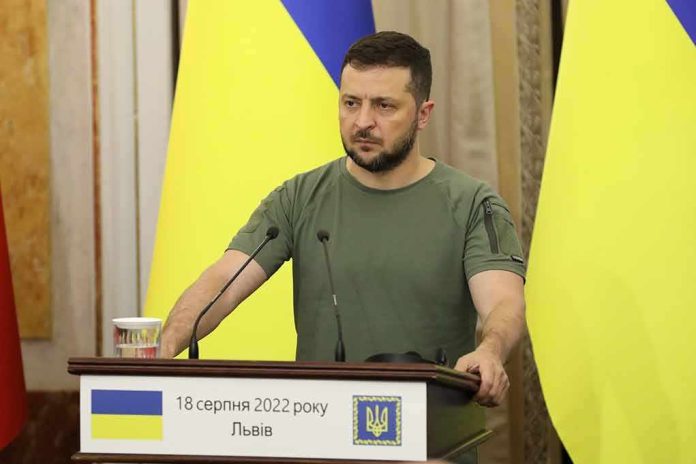
The visit delivered two layers at once. The images showed a leader standing with Ukraine while alarms wailed. The policy track pointed to joint weapons production and more aid for air defense and energy. Reporters on the scene noted the timing with fresh strikes, the bridge hit, and the tour of damaged sites, which framed the stakes for winter and beyond. Formal readouts will likely fill in money, delivery schedules, and industry partners in due course.
BREAKING: UKRAINE: Air Raid Alerts Sound In Kyiv As Russian Drones Strike During Merz Visit
German Chancellor Friedrich Merz was in Kyiv with President Volodymyr Zelenskyy on Sunday as repeated air raid alerts and explosions were reported across the Ukrainian capital.
Zelenskyy… pic.twitter.com/SnaNYz3Py6
— Geopolitics Now 360 (@geopoliticsnow_) October 4, 2026
High-level visits like this often compress into one headline: support under fire. The real test follows in factories, logistics hubs, and training grounds. If Germany and Ukraine lock in a drone and missile build with reliable software, supply, and repairs, Kyiv gains time and control. That is how wars of attrition bend. The sirens made the case in plain sound: speed, steady output, and clear terms beat slogans every day the lights flicker and the bridges shake.
Sources:
youtube.com, cnbc.com, trtworld.com, politico.eu, rferl.org, audacy.com, unn.ua