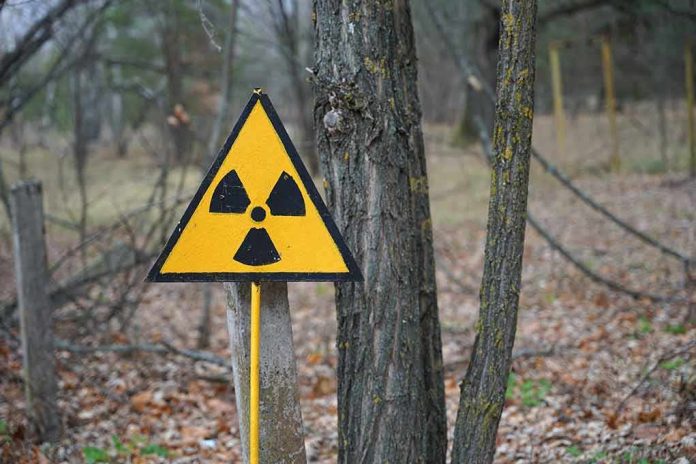
America blew up a tunnel in Nevada without a nuke to catch cheaters who try to hide one.
Story Snapshot
- Energy Department ran a non-nuclear blast in a Nevada tunnel to sharpen nuclear test detection.
- Goal focused on spotting tiny or “decoupled” blasts that mute seismic signals.
- Sensors gathered data to validate models and refine detection algorithms.
- Officials tied the work to finding low-yield foreign tests that try to slip past monitors.
What Happened, Where, and Why It Matters
The National Nuclear Security Administration, part of the Department of Energy, set off a chemical high-explosive charge underground at the Nevada National Security Site. The shot took place in the P Tunnel in Area 12, a legacy tunnel complex carved into the Nevada desert. Officials said the purpose was clear: improve America’s ability to detect low-yield nuclear explosions, especially those engineered to mask their seismic fingerprints. No nuclear material was used. The design mimicked how an adversary could try to hide a test.
The agency framed the experiment as nonproliferation work. It seeks to strengthen tools that flag covert or very small blasts before they grow into larger threats. Detecting such events is hard. Rock type, depth, and the way a cavity is prepared can all muffle the signal. That is why engineers build controlled blasts, log every wiggle in the earth, and then tune the models that help analysts tell the difference between an earthquake and a hidden test.
How A “Decoupled” Blast Tricks the Earth
A “decoupled” explosion happens when a blast goes off in a larger underground cavity. The empty space softens the seismic punch. The earth shakes less, so the signal looks smaller and can drop below normal thresholds. Adversaries might try this to dodge global monitors. The Nevada shot targeted that problem. By using a conventional explosive inside a tunnel system, scientists can measure how much the signal shrinks, across soil types and distances, and tighten the math that hunts for it.
Reporters tracking the official statement linked the work to foreign low-yield testing. Coverage cited concerns about attempts by China or Russia to conduct small or concealed blasts. The agency’s line stayed focused on detection of low-yield events and refining algorithms. The practical takeaway is the same either way: the United States wants to lower the odds that a decoupled shot can hide in background noise.
What the Instruments Saw and Why That Data Counts
The team deployed a layered web of instruments at and above the site. Arrays included accelerometers and seismometers for ground motion, infrasound and acoustic sensors for air-coupled waves, electromagnetic sensors for signal changes, and samplers for chemical traces and radiotracers that map how materials move. Weather sensors helped correct for wind and temperature that can bend sound paths. This mix lets analysts compare real-world signals to their code and fix any gaps.
⚡️🇺🇸🇨🇳 Reuters: The US National Nuclear Security Administration carried out a subsurface, non-nuclear chemical high-explosive experiment at the Nevada National Security Site’s P‑Tunnel in Area 12 to boost detection of low-yield nuclear blasts.
The test, aimed at improving…
— Nancy Abdallah🇺🇸🇵🇸🇾🇪🇱🇧🇮🇷 (@NanceAbdallah) October 2, 2026
Officials said the data will validate scientific models and refine detection algorithms that watch for nuclear explosions. In plain terms, the shot turns theory into numbers. Better numbers mean a lower false-alarm rate and a higher chance to catch the real thing. For policy and deterrence, that matters. If rivals believe they cannot sneak a test, they are less likely to try. That aligns with conservative priorities: peace through strength, clear rules, and accountability backed by capability.
The Bigger Picture: Verification Is a Craft, Not a Slogan
This experiment fits decades of steady work to harden the global alarm system. The National Academies have noted that detection confidence depends on yield, rock, and network coverage, and that performance drops as blasts get smaller or are decoupled. That is why controlled shots continue at legacy ranges under strict safety rules. It is not weapons development. It is instrumentation, geology, physics, and code—aimed at shrinking the shadows where cheats might hide.
One caveat deserves a single line and no drama: agencies often release summaries, not full technical appendices, to protect methods. The core facts remain firm and uncontested in public reporting—non-nuclear blast, Nevada tunnel, detection focus, data to tune models. The policy signal is firm, too. The United States is investing to see farther and hear softer signals. That is how you keep treaties real, deter risk-takers, and avoid surprises that could pull the country into crisis.
Sources:
kolotv.com, inshorts.com, washingtontimes.com, energy.gov, newsnationnow.com