DHS said automatic body cameras risk filming victims, informants, and peaceful protesters—and that risk outweighs the benefits.
Quick Take
- DHS rejected a watchdog push for auto-activation on ICE body cameras, citing privacy and operational risks.
- ICE policy already requires recording during enforcement and keeps a 30-second pre-event buffer.
- The Government Accountability Office warned manual activation leads to missed footage and review gaps.
- Public trust is at stake as recent cases lacked active cameras, sharpening scrutiny of ICE’s stance.
What DHS Said And Why It Matters
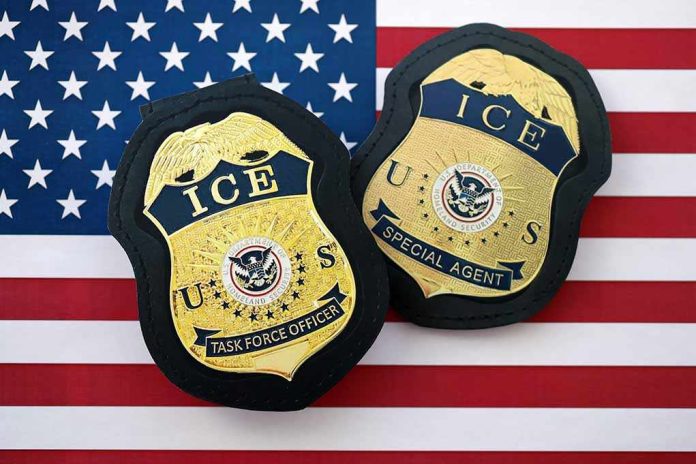
The Department of Homeland Security told the Government Accountability Office that automatic activation could trigger at the wrong time. Officials warned that false starts during routine movement could capture sensitive talks with victims and sources. They also flagged filming of peaceful protesters in areas where recording is limited. The department said these privacy, evidentiary, and operational risks outweigh the upside of automation, and it formally declined the watchdog’s recommendation to adopt auto-activation for Immigration and Customs Enforcement.
That rationale aligns with a basic conservative test: do not let a tool create new harm in the name of control. If a camera clicks on at the wrong moment, it can expose a source or chill speech. That risk is real. But risk alone is not a plan. The question is whether technology can narrow that risk with triggers, zones, or overrides, rather than a blanket “no.” The department’s response did not spell out where automation might work safely or what guardrails could reduce the risk.
What The Watchdog Found About Missed Footage
The Government Accountability Office found that manual activation leaves gaps. Some officers said turning cameras on in tense moments is hard. Reviews then lack key video, which hurts incident oversight and public confidence. The watchdog recommended automated activation controls to catch events that human judgment can miss, and it said many offices still lack precise rules for when to record. That leaves too much to split-second choices and memory.
These findings hit a core accountability value: trust, but verify. Cameras do not replace training or judgment. They do protect the truth when people argue over facts. If the system often misses the start of an encounter, it misses the context that explains force or restraint. That gap is not fair to the officer or the public. The case for some automation rests on that narrow, concrete point, not on a vague call for more surveillance.
What ICE Already Requires And Where It Falls Short
Immigration and Customs Enforcement policy requires agents to activate body cameras at the start of an enforcement action or as soon as safely possible. The policy also records at least 30 seconds before activation to capture the lead-up. On paper, this covers most needs while avoiding nonstop filming. In practice, the Government Accountability Office says offices have not all issued detailed guidance and that control activities are unreliable, which leads to missing clips and harder reviews.
NEW: A federal watchdog says gaps in ICE and CBP’s body-camera programs increase the risk that encounters required to be recorded could go unrecorded.
The GAO report, publicly released today, finds:
• Most CBP and ICE offices lack specific operational guidance explaining when…
— Ali Bradley (@AliBradleyTV) October 14, 2026
Public reporting raised the stakes by noting recent shootings where cameras were not recording, which makes the policy look weak on execution. Even if there are lawful reasons for not releasing footage later, the lack of video at the scene invites doubt. That is a reputational tax the agency now pays with interest. Critics will press harder because the watchdog’s findings give them firm ground, not just rhetoric.
A Practical Path That Respects Privacy And Captures Proof
A smarter middle path is available. Agencies nationwide use limited triggers that fit high-risk moments: weapon unholstered, cruiser lights on, or a foot chase start. These are not blanket surveillance. They act like seat-belt reminders for evidence. Combine that with hard bans on filming protected speech unless there is unlawful conduct, fast-access mute for sensitive victims, strict encryption, and clear retention limits. That model honors privacy while catching the flashpoint moments that matter most.
Conservative common sense says set rules, measure results, and adjust. Pilot auto-triggers in defined settings. Track false activations, missed clips, privacy complaints, and review outcomes. Publish the scorecard. If automation creates more harm than help, stop it. If it closes the gaps with few privacy hits, scale it. The current stance names real risks but stops short of testing narrow fixes. The public deserves both safety for the vulnerable and proof when force is used.
Sources:
washingtontimes.com, news.bloomberglaw.com, ground.news, washingtonpost.com, ice.gov, flipboard.com