Minnesota law lets eligible citizens register on Election Day with a photo ID plus a recent phone, TV, or internet bill that shows where they live, and that single detail explains the firestorm.
Story Snapshot
- Minnesota allows same-day voter registration with proof of identity and current address.
- A phone, TV, or internet bill dated within 30 days can prove residence when paired with photo ID.
- Already-registered voters in Minnesota generally do not need to show ID at the polls.
- The state says it cross-checks registrations and flags possible noncitizens for challenge and referral.
What Minnesota Law Actually Requires at the Polls
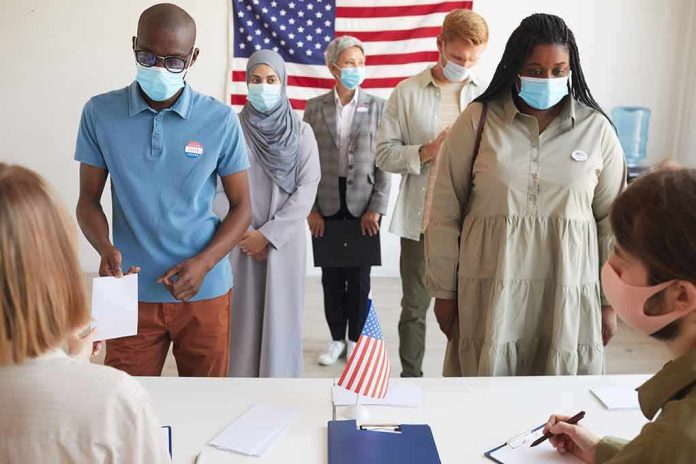
Minnesota statute allows an eligible voter to register on Election Day by appearing at the polling place, completing the form, taking the oath, and providing proof of residence. The proof menu is specific. A voter can show a photo ID plus a document with their current name and address. The state’s official guidance lists acceptable documents. It includes a phone, television, or internet bill dated within 30 days, which many households can produce fast.
Once registered and marked active, a Minnesota voter usually does not need to show identification to receive a ballot. The Secretary of State’s page says that if your voter registration is current and active, you do not need to bring identification. That line fuels suspicion among skeptics, but it reflects a common practice in many states. The poll book is the gate. If your name and address match the roll and you sign, you vote a regular ballot.
Where Critics See a Gap—and What the Rules Say
Critics focus on one pain point: the system verifies identity and residence on the spot, but it does not ask for a citizenship document at the polling place. The Election Day process relies on the voter’s signed oath of eligibility, which includes United States citizenship, and later checks against government data. The law keeps a low barrier at the front door while pushing verification into back-end checks. That trade-off is the heart of the debate over risk versus access.
Supporters of the current rules point to back-end screening. Minnesota says it compares registration data with Driver and Vehicle Services, Social Security Administration, Department of Health, and court records. Officials say they run these checks before and after elections. Records that match a temporary-visa noncitizen are challenged. The person must answer questions under oath before voting, and the case is sent to a county attorney.
Phone or Internet Bills as Proof: How Far That Goes
The headline claim that “a phone bill is enough” leaves out key limits. The document must show the voter’s current name and address. The bill must be recent. The voter must also show a photo ID when using this option at the polling place. These requirements appear in the state’s official Election Day registration guide and the underlying rule language. The rule aims to anchor a name to a real place. It does not replace the eligibility oath or later database checks.
🛑 Minnesota Election Official Goes on Somali TV: "You Don't Need to Bring Anything" (ID)🛑
Minnesota's voter outreach director, Melanie Hazelip, from Secretary of State Steve Simon's office, went on Somali TV of Minnesota and told viewers exactly how easy it is to vote in her… pic.twitter.com/4u9Zi5kFEs
— Katie K USA (@KimKatieUSA) October 27, 2026
Outreach efforts often highlight these exact documents to help new voters prepare. The Secretary of State’s voter outreach materials explicitly tell groups to explain same-day registration and to coach people on what to bring, including accepted bills for address proof. Critics hear that and infer a loophole. But the material mirrors the law as written. The smarter question is not whether the list exists. It is whether back-end screening catches rare but real attempts by ineligible people.
The Evidence Fight: Scale, Safeguards, and Common Sense
State officials claim noncitizen voting is rare. The Secretary of State pointed to an analysis finding three noncitizen voting cases among 13.4 million ballots from 2015 to 2024, all legal permanent residents, not undocumented migrants. That figure will not satisfy everyone. It does set a baseline for scale: if abuse exists, it appears uncommon in the data the state reports. The absence of named prosecutions tied to the cited outreach also leaves the claim unproven either way.
Here is the conservative common-sense read. The front-end is permissive by design to avoid blocking eligible voters for paperwork lapses. The back-end promises to clean the list and flag problems. That system demands strong, transparent audits. Publish aggregate counts of flagged records, challenges, referrals, and outcomes each cycle. Release false-match rates. Show the time to resolution. If the state wants trust, it must show its math, not just state it. If critics want proof of abuse, they need cases, not clips.
What Would Close the Confidence Gap Now
Two fixes would help. First, improve outreach scripts so they pair “what to bring” with a crisp reminder that only United States citizens may vote, and that all registrants swear an oath under penalty of law. That trims confusion. Second, publish a post-election audit dashboard that reports matches to temporary-visa files, challenge counts, ballots set aside, and county attorney referrals, with outcomes and timelines. Sunlight clarifies whether the risk is fringe or meaningful.
Sources:
thegatewaypundit.com, sos.mn.gov