Audi’s chief executive stood onstage next to President Trump at a Georgia campaign rally, and his own company’s labor allies immediately called it a betrayal of corporate neutrality rules.
Story Snapshot
- Gernot Döllner appeared with President Trump at a Republican rally in Perry, Georgia, on October 24, 2026, days before the midterm elections.
- IG Metall union president Christiane Benner accused him of a “flagrant breach” of Audi’s political-neutrality policy.
- Audi announced a roughly $4 billion Georgia investment at the event, tied to new SUV production plans.
- Döllner and Audi say the appearance was a business decision, not a political endorsement.
What Happened Onstage In Georgia
Döllner joined President Trump at a campaign rally in Perry, Georgia, just before the midterm elections. He thanked the president for his support and laid out Audi’s plans for a new SUV plant in the state. Reports put the investment between $4 billion and $4.2 billion, with production estimates near 200,000 vehicles a year. The timing and setting turned a business announcement into a political spectacle.
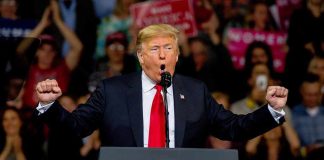
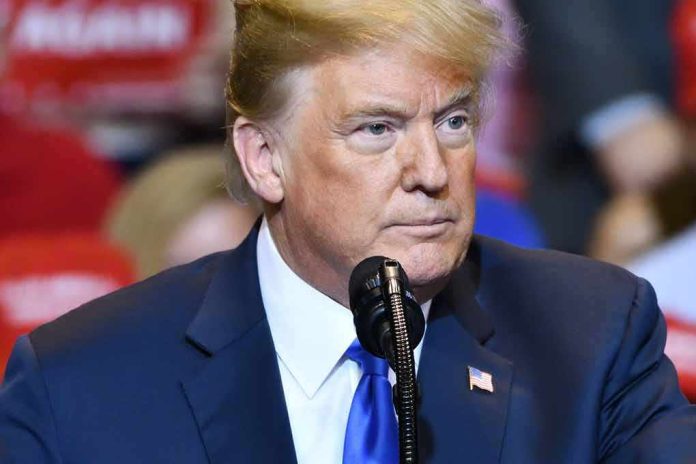
Footage of the rally shows Döllner standing beside President Trump, shaking hands and gesturing toward the crowd. For a foreign CEO leading one of Germany’s most recognized car brands, sharing a stage at a partisan event just days before an election was no small gesture. It instantly became the image critics pointed to back home.
The Union’s Case Against Him
Christiane Benner, head of Germany’s IG Metall union, did not hold back. She said Döllner was in “flagrant breach of his own company’s rules, which expressly require political neutrality in the run-up to elections”. Benner also sits on Volkswagen’s supervisory board, giving her criticism real weight inside the company, since Audi operates as part of the Volkswagen Group. Her comments were echoed by other German politicians who called the move “disturbing and pathetic”.
Audi’s own spokeswoman did not dispute the principle Benner invoked. She confirmed that “political neutrality is an important principle for Audi, one to which we remain committed”. That admission matters. It means the argument isn’t over whether Audi has a neutrality standard, but whether this specific appearance crossed it. The company insists it didn’t.
Döllner’s Defense And What It Reveals
Döllner pushed back directly, saying Audi accepted the invitation “solely in the company’s interest”. He argued that turning down an invitation from a sitting American president would show disrespect to the office and to the country where Audi plans to spend billions. He also stressed the investment is a decades-long commitment, not something tied to a single election cycle.
Notably, a person familiar with the matter told reporters that Audi’s management board had cleared an exception to the company’s code of conduct before Döllner ever stepped onstage. That detail is significant. If accurate, it means this wasn’t a rogue decision by one executive but a calculated move approved at the top, with full awareness of the neutrality policy it might bend.
Why This Fits A Bigger Pattern
This isn’t just a German corporate squabble. Research shows CEOs have become far more politically visible over the past two decades, with nearly 3 in 10 S&P 500 chief executives making public policy statements in national media between 2000 and 2018. Stakeholders generally want executives to steer clear of divisive politics, and when they don’t, reactions split hard along partisan lines rather than settling into agreement.
That split is exactly what’s playing out here. Supporters see a CEO showing respect for the American presidency while securing a massive investment and real jobs for Georgia. Critics see a German company’s leader lending his name to an explicitly partisan rally. Both things can be true at once, and that tension is precisely why this story resonates beyond one auto plant.
What’s Still Unresolved
The actual text of Audi’s neutrality policy has not been made public, so outside observers can’t say for certain whether it was technically violated or merely stretched. Likewise, no full board vote or detailed internal communication has surfaced beyond the claim of a management exception. Until those documents emerge, this remains a dispute over judgment and optics as much as over a clearly broken rule.
What’s clear is this: Audi wanted American jobs, American manufacturing, and American market access badly enough to put its CEO on a political stage next to the sitting president. Whatever Germany’s unions think of the optics, that’s a vote of confidence in the U.S. economy that deserves more credit than criticism.
Sources:
youtube.com, afp.com, straitstimes.com, sunherald.com, tucson.com, detroitnews.com, dw.com, pubsonline.informs.org