
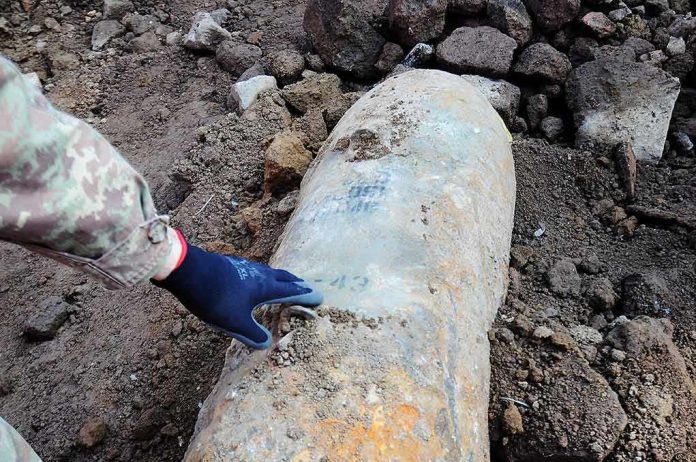
The Army chose to blow up nearly five tons of aging lead azide in Iowa because experts said it was too unstable to move and could explode on its own.
Story Snapshot
- The U.S. Army conducted a controlled, “mitigated” detonation at the Iowa Army Ammunition Plant.
- Federal regulators approved an emergency permit citing “imminent and substantial endangerment”.
- Officials framed in-place destruction as safer than transport or handling.
- Courts reviewed the permit as opponents pressed for other options.
What was detonated and why it could not wait
Army teams found the stockpile was degraded lead azide, a sensitive blasting compound that can crystallize and become shock-prone. Officials said the material had become too unstable to handle or move without risking a chain reaction. The Army’s public advisory set a time window and warned that delay raised the chance of a spontaneous blast. The decision aimed to trade one loud, planned event for the prevention of an unplanned one with far greater harm.
Federal agencies backed the approach with emergency authority. The United States Environmental Protection Agency issued an emergency hazardous waste permit that allowed storage and treatment by intentional detonation, finding an “imminent and substantial endangerment” to people and the environment. That authorization gave a legal path to act fast inside strict guardrails, rather than drag out a slow process while the explosive kept aging in barrels.
How leaders planned to control risk to neighbors
Risk control started with location. The Army used an existing, permitted open detonation site inside the plant’s footprint, built to vent pressure and manage debris. Engineers designed a “mitigated” shot, using layers of soil, water, and other barriers to catch fragments and reduce dust. Air monitoring was set up to track lead in real time. State health officials shared simple steps for residents, like staying indoors during the blast window and rinsing outdoor surfaces afterward if needed.
Officials laid out the logic that moved detonation to the top of the list. Once lead azide becomes too sensitive, each touch, lift, or bump adds risk. Moving dozens of containers turns one big gamble into many small gambles. Explosives safety doctrine and federal practice accept rapid destruction, often by open detonation, when an immediate hazard exists and safer alternatives are not workable in time. The aim is to contain a known danger rather than chase perfect control that does not exist.
Courts, critics, and the test of “emergency”
Legal challenges focused on whether the emergency permit and process were justified. Petitioners pressed the Environmental Protection Agency in court, arguing the agency moved too far, too fast. The United States Court of Appeals docket shows direct review of the permit and the Army’s plan. Courts often ask whether the record supports an “imminent and substantial endangerment” and whether agencies weighed reasonable options. That line of review helps keep emergency powers from drifting.
Fair questions from neighbors centered on lead dust and long-term soil impact. Agencies answered with monitoring, sampling, and cleanup triggers if levels rose. That exchange reflects a healthy check: act fast to stop a blast, then prove the fallout is within limits, and fix what is not. From a conservative lens, that balance respects both duty of care and the reality that government must act decisively when a clear, proximate threat could kill people.
The bigger pattern in explosive emergencies
Explosives emergencies pit two kinds of risk against each other. One is a low-probability but catastrophic event if the material self-detonates. The other is measurable, more familiar exposure risk from an intentional blast. Agencies tend to choose the path that prevents mass casualty and then manage exposure with engineering controls and data. The Federal Register captures this logic in proposed rules that frame when open detonation is justified as a last resort in de minimis, emergency cases.
🚨 UPDATE: We're now 1 HOUR past the lead azide detonation, and ALL EPA live air monitors are still reading 0.0 µg/m³
NO LEAD DETECTED in the air in Iowa.
EPA is giving updates every 5 minutes. https://t.co/RY1uWWUquC pic.twitter.com/DyS6jBZpnz
— Nick Sortor (@nicksortor) November 25, 2026
The Iowa operation also fits decades of practice in handling unstable stockpiles. Past events show that once an explosive crosses a sensitivity threshold, transport and disassembly can be worse than a single, controlled destruction. The Army’s environmental assessment process and emergency communications pointed to that tipping point. The immediate goal was simple and hard to argue with: make sure there is no surprise explosion near homes, schools, and workers, and back that promise with transparent measurement afterward.
Sources:
facebook.com, apnews.com, army.mil, epa.gov, ecf.ca8.uscourts.gov