No explosives were found after a wave of bomb threats forced diversions, inspections, and a brief airport shutdown across Europe.
Story Snapshot
- Four Europe flights faced bomb threats; all landed safely and were searched.
- Warsaw-Modlin closed briefly after a diverted London–Warsaw flight landed for checks.
- A Ryanair Manchester–Murcia flight and an Israel–Sofia flight were cleared after searches.
- An earlier Wizz Air London–Sofia flight diverted to Budapest with a fighter escort; no device.
What happened across the routes
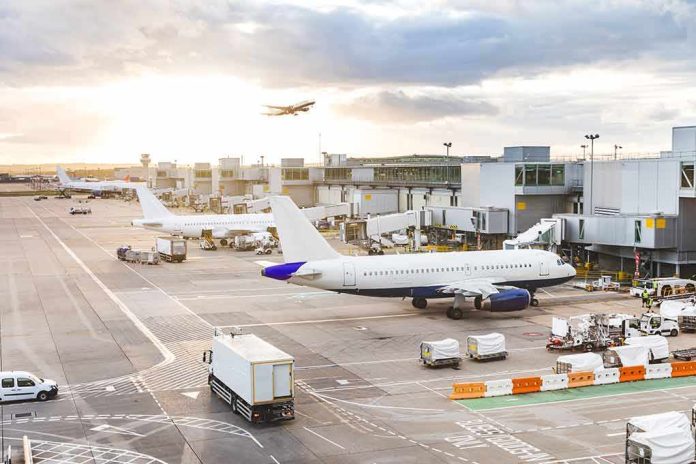
Authorities received bomb threats against several flights bound for European airports. Crews diverted when told by controllers or airlines. A London Heathrow to Warsaw flight with 181 people on board was redirected from Warsaw Chopin to Warsaw-Modlin, which temporarily closed for security checks; the plane and terminal were cleared, and no device was found. A Ryanair flight from Manchester to Murcia also underwent inspection in Spain after a reported threat; officials said searches found no explosives. A flight from Israel to Sofia landed safely and was cleared after an email threat.
Two flights headed to Warsaw drew special focus. A Scandinavian Airlines plane from Copenhagen landed at Warsaw Chopin Airport and was checked on arrival. A Chopin Airport spokesperson said the aircraft was inspected, and Polish authorities did not confirm the threat. The Heathrow flight’s diversion to Modlin created a ripple effect for local traffic and briefly halted operations until security teams completed their sweep. Passengers across the affected aircraft disembarked under standard procedures and later reboarded or were bussed onward as operations resumed.
The Budapest diversion the day before
The cluster of alerts followed an earlier incident involving a Wizz Air flight from London Luton to Sofia. Authorities diverted that aircraft to Budapest after a bomb threat was reported. The Hungarian Defense Minister said a fighter jet escorted the plane to the airport, where checks found nothing dangerous on board. Wizz Air later said security teams completed their inspection with negative results. This earlier diversion set the tone for the firm responses that followed on Tuesday’s flights.
Reports from different outlets varied on the total flight count, with some adding later Rome incidents or tallying related alerts. The common thread across the confirmed cases remained the same: crews and airports followed established playbooks, aircraft were searched, and no explosives were discovered. Officials did not release any suspects or an attribution for the threats at the time of reporting. Airlines emphasized that safety steps were taken while they worked to minimize delays.
Why the response was so strong
Airports and pilots treat every bomb threat as real until they prove otherwise. That is not drama; it is discipline. Diversions reduce risk while giving police and bomb squads time to work. Modlin’s brief closure shows how the system prioritizes life first, schedule second. That system is layered by design. When it works, the public sees delay, not danger. Researchers estimate modern aviation security layers sharply cut the odds of a successful attack, but every alert still triggers costly steps and tight coordination.
✈️ ⚠️ 🇪🇺 At least four European flights were targeted by bomb threats on Tuesday, forcing the temporary closure of one Warsaw airport, but all planes landed safely and no explosives were found, authorities said ➡️ https://t.co/xW6dzSthTW pic.twitter.com/29Pq5dWv7U
— AFP News Agency (@AFP) November 3, 2026
These hoaxes also carry a price. Every diversion burns fuel, ties up runways, and scrambles security teams. A single false call can ripple through an afternoon of flights. That cost lands on travelers and airlines, and, in the end, on families and small businesses waiting at the other end. Conservative common sense says deter this behavior hard: swift charges for false reports, recovery of costs from offenders, and fast public updates that calm nerves without tipping tactics to copycats. Europe’s response this week leaned that way—measured, fast, and by the book.
What to watch next
Police and aviation authorities will work the digital trail behind the threats. Email headers, carrier logs, and airport timelines can show patterns. If one actor is behind multiple alerts, that will shape how courts view intent and penalty. If the threats are scattered, the fix is stronger front-door filters and tougher consequences that make hoaxes less tempting. Until then, passengers can expect firm but calm handling: a diversion if needed, a careful search, and then wheels up once cleared.
Sources:
insiderpaper.com, bbc.co.uk, nbcnews.com, lbc.co.uk, washingtonpost.com