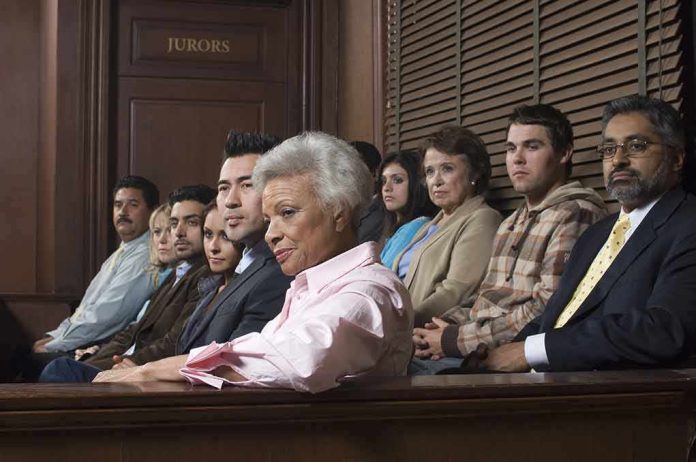
A lone juror’s background exploded into the Lindsay Clancy mistrial story and set off a political firestorm.
Story Snapshot
- A single juror blocked an acquittal in the Lindsay Clancy trial, leading to a mistrial.
- Local reporting said the holdout juror had past domestic-violence allegations and a current restraining order.
- Jurors went on television and described the holdout’s stance and reasoning.
- Florida Governor Ron DeSantis defended the juror and blasted media coverage.
What Happened In The Jury Room And After
Judge William Sullivan declared a mistrial after the jury failed three times to reach a verdict in the Lindsay Clancy case. Coverage described the panel as 11 jurors favoring not guilty by reason of lack of criminal responsibility, with one juror holding out. Three jurors then spoke in televised interviews. They said the holdout admitted he had reasonable doubt but still would not join a not-guilty verdict. The court sealed juror names for at least two weeks to protect privacy and safety.
Local news then reported on the holdout’s past. The coverage stated he faced a domestic-violence-related charge in 2021 that was later dismissed, and that a teenage nephew who reported the incident later obtained a restraining order. The reporting also said the juror faced a pending eviction during the trial window. These details added fuel to arguments about juror bias, though the legal system treats such claims as a process issue, not proof of a right or wrong verdict on the facts.
The Legal Lane: Holdouts, Misconduct, And Court Tools
The law draws a sharp line between a stubborn juror and a tainted verdict. A holdout is not misconduct. Courts step in only when there is solid reason to think jurors saw or did something improper. At that point, judges can question jurors, give new instructions, or replace a juror. If prejudice cannot be cured, a mistrial is the safety valve. The burden to prove juror misconduct sits with the party raising it, and courts guard deliberation secrecy for good reason.
High-profile trials add pressure. Judges often tighten rules, shield juror identities, and warn against outside contact to keep the process clean. After a verdict or mistrial, jurors may speak to media, but professionals urge caution. Talking about deliberations can spark backlash, distort the public record, and invite harassment. The Clancy jurors’ interviews are now part of the public narrative, but they do not change what the court counts as evidence.
Politics Jumps In: Media, Privacy, And Common Sense
Florida Governor Ron DeSantis criticized news outlets for going after the holdout’s personal life and said Florida would provide “asylum” to the juror. He framed the reporting as a media smear of a citizen who served on a jury in a brutal case. On the facts, the domestic-violence charge was dismissed, and a restraining order is a civil tool, not a criminal conviction. Fair-minded people can agree on this line: judge jurors by their conduct in the case, not trial-by-Google.
American conservative values place due process above mob reaction. That cuts both ways. If a juror hid disqualifying facts or violated orders, the court should investigate and act. If not, attacking a juror’s dismissed charge or housing dispute to undo a deliberation is a bridge too far. The proper remedy for concerns remains inside the courtroom. The next trial will test how well the court can keep the jurors safe, the record clean, and the focus on evidence, not personalities.
Sources:
mediaite.com, thehill.com, nytimes.com, nbcnews.com, yahoo.com, cnn.com, washingtonpost.com, waynelawreview.org, casemine.com