Baghdad locked down its streets as the last American troops rolled out, sealing a handover years in the making.
Story Snapshot
- Iraq staged a heightened security posture as U.S. forces completed their exit.
- The withdrawal capped a planned, phased transition to Iraqi control under prior agreements.
- Officials marked the moment with ceremonies and base closures noted in prior timelines.
- Analysts warn vacuums can invite militias and extremists if the state falters.
The Final Convoys And A City On Guard
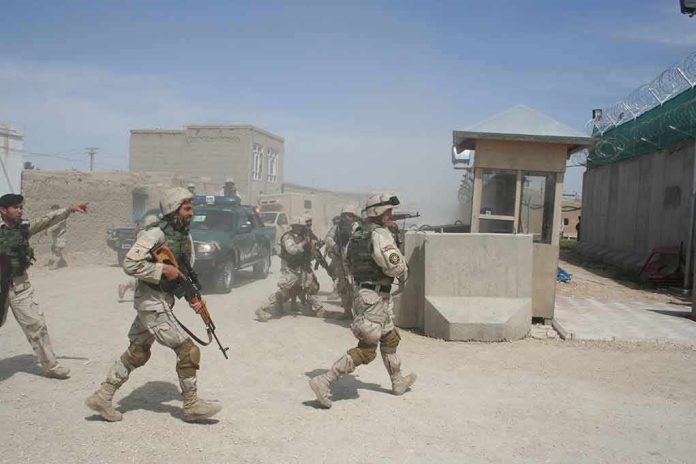
Iraqi authorities flooded key routes and government zones with police and soldiers as the last U.S. units departed. Checkpoints, road closures, and tight patrols signaled both pride and caution. The move followed years of drawdowns and base turnovers that prepared Iraqi forces to own the security file. Washington and Baghdad long framed this as a transition, not a surprise exit. The day’s choreography aimed to project control as columns crossed out and the capital steadied its pulse.
U.S. and Iraqi leaders previously locked the logic and the legal path for withdrawal. The 2008 bilateral security framework set the end-state and mapped how American forces would pass duties to Iraqi units. That plan shaped the cadence of training, advising, and base transfers for years. It also ensured protections for U.S. troops while the handover advanced. The structure mattered more than speeches, because it fixed dates, roles, and responsibilities that today’s final step fulfills.
What The Handover Really Means On The Ground
The security handoff is more than a flag ceremony. Iraqi commanders now own route security, intelligence fusion, and quick-reaction tasks that U.S. units once backed. The Ministry of Interior and Ministry of Defense must coordinate policing, counterterrorism, and border control without external muscle. Success hinges on steady chains of command and clean logistics. Cities like Baghdad need fast information sharing to stop bomb plots and militia provocation before they spread beyond one district.
Capacity gaps still matter. Militias tied to political blocs test state authority in gray zones. Some answer to foreign patrons. That mix can blur lines between legal forces and armed groups. When the state hesitates, these actors step in and claim turf. Iraqi officials have to keep training, pay forces on time, and hold a single line of command. The record since territorial defeat of the Islamic State shows resilience, but it also shows how stress can expose seams that rivals exploit.
Lessons From 2011: Dates End Wars, Readiness Keeps Peace
The last time U.S. troops left, the calendar closed on schedule, yet the system sagged soon after. Analysts in Washington flagged the risk then: meeting a deadline is not the same as locking in deterrence. The return of U.S. forces in 2014 to fight the Islamic State proved the point. Today’s exit draws the same line in the sand. The burden now sits squarely on Iraqi institutions to prove that the house can stand without external scaffolding.
🌍 WORLD NEWS DIGEST
📅 Sep 30, 2026 · Past 12 Hours🔥 MIDDLE EAST
• US COMPLETES IRAQ WITHDRAWAL: The Pentagon says the pullout of American troops from Iraq is complete, closing a 12-year mission that began against ISIS. Baghdad now faces a high-stakes security balancing act… pic.twitter.com/FcaGeSLaEl— 0xzx • Crypto & AI News (@0xzxcom) September 30, 2026
American conservative common sense says clarity beats half-measures: set a lawful end date, hand over the keys, and hold partners to their word. That happened here. The next test is enforcement. Baghdad must restrain militias, protect minority communities, and keep borders from leaking fighters and weapons. Washington should backstop with diplomacy and targeted support, not open-ended deployments. Peace holds when the state is the only gun in the room. That is the sober metric now in play.
Sources:
reuters.com, en.wikipedia.org, trtworld.com, dw.com