Six U.S. soldiers died and dozens were wounded, then some of the survivors say they had to Google a hospital because the system meant to save them did not show up.
Story Snapshot
- Survivors describe self-triage and civilian rides to care after the March 1 strike.
- Wounded troops allege missed injuries, slow evacuation, and red tape in Germany and stateside.
- Pentagon says care was appropriate and admissions followed medical standards.
- Lawmakers pressed for answers on gaps from blast to benefits processing.
What the survivors say happened after the blast
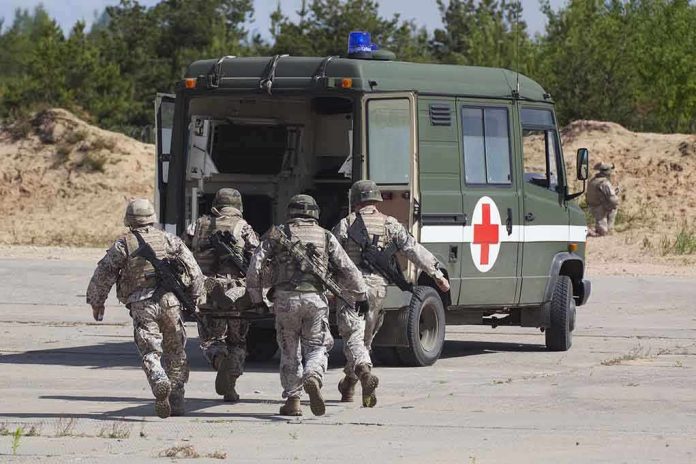
Soldiers at Port Shuaiba in Kuwait say the Iranian drone hit a tactical center on March 1, killing six and wounding many more. Several of the wounded told reporters they had to triage themselves with tourniquets and makeshift bandages. They say they flagged down or used civilian cars and drove to local Kuwaiti hospitals because no clear medical evacuation plan kicked in fast enough. Their accounts stress minutes lost, confusion over roles, and pain that grew as swelling set in.
Survivors also describe injuries that did not get logged or were downplayed at first. They cite ruptured eardrums, shrapnel, broken bones, and brain injuries that were not tested or treated right away. Some say they asked for more medics and supplies before the attack but felt ignored. Their stories paint a chain that broke in three places: on-site care, evacuation routes, and documentation that unlocks later treatment and benefits.
From Kuwait to Germany: the dispute over admission and care
Many wounded were moved to Landstuhl Regional Medical Center in Germany. Several say they were told to wait in barracks, not admitted as inpatients, because their combat injuries were not yet documented in the system. They recall limited treatment and delayed scans. Some later flew to the United States with symptoms still unresolved. Their frustration centers on a simple point: if the record lags, the care lags too, and recovery time stretches.
The Pentagon’s response is direct and narrow. Officials say the medical response was appropriate. They add that all wounded who arrive at military facilities get evaluated, and admissions depend on injury severity under accepted health care standards. One Pentagon official also explained that Landstuhl’s role in wartime is to stabilize patients for transfer to specialized care in the United States, not to hold many as inpatients. That may be true in doctrine, but the lived experience described by troops raises a hard question: who closes the gap between “stabilize” and “actually healing.”
Why this keeps happening in modern war medicine
After-action reviews over decades show recurring shortfalls in combat casualty care. Reports flag weak planning, patchy communications, thin staffing, and supply gaps. These flaws slow evacuation and make it easy to misclassify injuries in the rush. When soldiers move through civilian hospitals, then to Germany, then home, records scatter and details fall through cracks. That is a known pattern, not a one-off shock tied to this single strike.
Medical research also warns that delays and holds increase risk, especially for blast wounds and brain injuries. The longer casualties wait beyond the first hours, the more problems stack up. Experts argue for forward-placed care and tight control of the evacuation chain to cut those risks. None of that is new. The question is whether commanders and medical leaders at Port Shuaiba had resourced and rehearsed those basics before March 1. Survivors say they had not.
Accountability, common sense, and what should change next
Members of Congress asked military leaders to explain why wounded troops reported slow testing, inconsistent support at recovery units, and even leave limits while hurt. Letters to defense leaders cite allegations that some soldiers in Germany got told to wait in barracks due to paperwork status, not medical need. They want to know why the admission bar looked so high for people hit by an enemy drone. For many families, that is not a process glitch; it feels like broken trust.
Six American soldiers were killed in the Iranian drone strike on Port Shuaiba.
Now wounded troops tell the AP they were left fighting the military bureaucracy just to get proper care afterward.
They survived the enemy. They shouldn’t have to fight their own system too. pic.twitter.com/KFrRCfbc2N
— YESTERDAY’S NEWS CHANNEL (@YN_NewsChannel) October 5, 2026
Common sense and conservative values point to a clear fix list. First, rehearse evacuation with real timelines and real gear, not slide decks. Second, lock in automatic injury documentation at the first point of care, including civilian hospitals, so Landstuhl and U.S. teams see the same record within hours, not weeks. Third, set a no-debate pathway for blast testing and traumatic brain injury scans after any drone or rocket hit. Stabilize, yes—but then treat and admit when symptoms persist. The country owes that much to those who ran toward the blast.
Sources:
military.com, usnews.com, independent.co.uk, warren.senate.gov, ground.news, militarytimes.com, apps.dtic.mil, academic.oup.com