A passenger was injured when a laptop battery overheated and filled an American Airlines cabin with smoke, but the crew contained it and landed safely.
Story Snapshot
- American Airlines Flight 2398 from Atlanta to Dallas/Fort Worth landed safely after smoke from a passenger’s device during landing, according to the airline.
- The crew reported a laptop battery fire; flight attendants used a thermal containment bag to control it, per Federal Aviation Administration reporting cited in coverage.
- The aircraft taxied to the gate for responders; a passenger was treated and released at the airport, officials said.
- Air traffic control audio captured the pilot estimating four to five burn injuries as the crew managed the cabin event.
What Happened Onboard Flight 2398
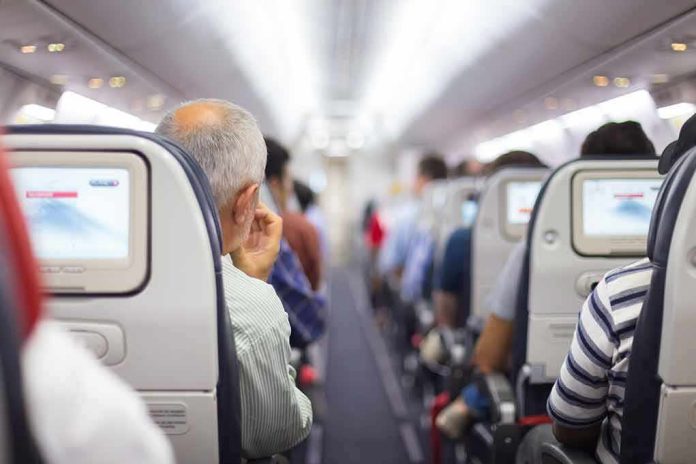
American Airlines Flight 2398 was nearing Dallas/Fort Worth from Atlanta when smoke appeared from a passenger’s device. The airline said the aircraft landed safely after reports of smoke from a customer’s device during landing and taxied to a gate for emergency response. Federal Aviation Administration reporting cited by outlets described a laptop battery fire that flight attendants contained with a thermal containment bag. The cabin crew coordinated with air traffic control and did not order an evacuation. The situation stayed under control while the plane cleared the runway.
Ground responders met the aircraft at the gate. Airport officials said one person received treatment for injuries and was released at the scene. A separate radio call captured the pilot telling controllers that four to five passengers had burns linked to the laptop and that there was a cabin fire in the back of the plane. Those counts often shift in real time. Early numbers tend to reflect fast estimates from the cockpit while crews focus on safety, not detailed triage.
Why Lithium Batteries Keep Making Air Safety News
Lithium-ion batteries power our phones, laptops, and earbuds. When damaged or defective, they can overheat fast and enter what engineers call thermal runaway. That can mean smoke, heat, and in rare cases, flames. Federal Aviation Administration tracking shows a record run of battery-related smoke or fire events in recent years, with laptops a recurring source category, not a one-off issue. Flight crews train for this risk and carry thermal containment bags and lots of water to cool and isolate a device.
Cabin fires matter because smoke spreads quickly in tight spaces. Crews drill on three basics: identify the device, cool it, and contain it. They also move nearby items and watch for re-ignition. The reported use of a thermal containment bag on Flight 2398 matches that standard playbook. The goal is to keep the event small and stable, then get the aircraft on the ground and to a gate. That is what happened here, and it limited harm to passengers and crew.
What The Conflicting Injury Numbers Really Mean
On-scene injury counts often look messy. The pilot’s four-to-five figure on the radio likely reflected immediate reports from the aisle during smoke and movement. The later “one treated and released” update came after responders examined people more closely at the gate. Both statements can be true in sequence. Minor burns and smoke irritation can feel serious in the moment but may not require hospital care. Conservative reporting should anchor to official tallies once responders finish checks.
Airlines and airports also choose words with care. “Contained,” “landed safely,” and “treated and released” are not spin when the facts fit them; they are signals that training worked and the threat was managed. That alignment matters to anyone who values order, competence, and clear chains of command. The cabin crew acted fast, followed procedures, and delivered everyone to the gate. That is the kind of quiet professionalism most travelers want every time they fly.
Practical Takeaways For Travelers
Simple steps lower the odds of a scary scene. Keep laptops and phones where you can see and reach them. Do not wedge a device under a seat or cram it in a seat pocket with hard items that can crush it. If a device is lost between seats, call a flight attendant instead of moving the seat yourself. If a battery gets hot or smokes, alert the crew at once and move away so they can cool and contain the device. These habits help crews help you, fast.
Sources:
washingtontimes.com, aviationa2z.com, youtube.com, cbsnews.com, facebook.com