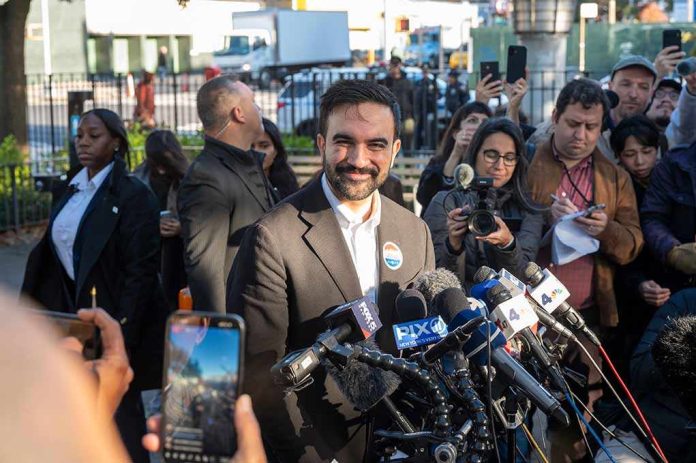
New York City is about to split protest response from counterterrorism—and the fight over what that really means starts now.
Story Snapshot
- Mayor Zohran Mamdani plans to disband the NYPD Strategic Response Group and split its duties.
- A civilian-led team would handle protest communication and de-escalation, with police nearby for arrests.
- A proposed Patrol Support unit may keep much of the old group’s protest muscle, including mass arrests.
- Critics warn this could be a cosmetic rebrand, not a real reform; supporters see needed clarity of mission.
What the mayor says will change—and why it matters
Mayor Zohran Mamdani says protest response and counterterrorism should not live in the same unit. His administration plans to disband the Strategic Response Group and separate these missions. That answers a simple question with big stakes: should the people who manage peaceful crowds also hunt terrorists? The mayor’s team says no. They argue protest management should focus on communication first, not force. That line draws on years of crowd-policing lessons without claiming police can vanish from tense events.
The reported plan creates a civilian team to talk with organizers, reduce tension, and guide crowds. New York Police Department officers would stage nearby to step in if someone breaks the law or a crowd turns violent. This aims to keep rights intact while keeping backup ready. It also keeps a counterterrorism posture separate from speech and assembly work. The move tries to avoid a blunt, one-size-fits-all response that treats every march like a riot or a bomb threat.
What stays the same—and where critics see a trap
The proposal may keep much of the Strategic Response Group’s power under a new banner. Reporting points to a Patrol Support unit that could still move fast, form lines, and run mass arrests when needed. Some inside the department appear open to the shift, which lowers the risk of an internal standoff. But reform advocates call this a shell game if the tools and tactics do not change. One source even called the move a “rebranding,” which is political tinder in any big city.
Police-reform groups set a clear bar. They say breaking up the Strategic Response Group means more than a new patch. They want fewer mass arrests, different tactics, and money moved out of police budgets into communities. They also want proof. So far, the public has not seen the final order, staffing map, training plan, or rules for who makes the call when a protest turns. Without that paper trail, critics will define the change before City Hall does. That is how you lose the narrative, even if the structure shifts.
The core policy bet: separate missions, safer streets
Research and common sense point to a steady truth: the first posture at a protest sets the tone. Talking early, aiming force at actual lawbreakers, and keeping heavy gear off the front line can cool a crowd. That supports the mayor’s premise that protest engagement and counterterrorism demand different skills. At the same time, New Yorkers expect speed when danger hits. A named successor unit that keeps rapid response for violence and emergencies protects that expectation while dialing down the chill on free speech.
NYC Mayor Mamdani Moves to Disband NYPD Strategic Response Group and Shift Protest Duties to Civilians
• Fulfilling a core progressive campaign pledge, New York City Mayor Zohran Mamdani announced the city will dismantle the NYPD's militarized Strategic Response Group, backing…
— Newstro (@Newstro) November 14, 2026
The real test will not be the press release. It will be the data. Voters should watch three things: fewer unnecessary arrests at peaceful events, fewer injuries to both protesters and officers, and faster, cleaner responses when real threats appear. A clear order that defines who leads, who follows, and how a scene escalates will help. If City Hall wants trust from skeptics, it should publish the playbook and invite an independent audit within a year.
The conservative lens: accountability, order, and rights
Public safety and the First Amendment rise or fall together. A city that treats prayer vigils like riots breeds chaos. A city that hesitates when knives or guns appear invites tragedy. This plan tries to draw a brighter line between those worlds. That idea fits conservative values when it delivers three things: firm command authority, clear consequences for lawbreakers, and proof that protests end with fewer cuffs and fewer hospital trips. If results lag, call it what it is and fix it fast.
Sources:
nypost.com, nydailynews.com, abcnews4.com, nytimes.com, police1.com, nbcnewyork.com