A checked suitcase at a California airport held two live snakes, one reportedly a rattlesnake, and the line went still.
Story Snapshot
- TSA officers at Ontario International Airport found two live snakes in checked luggage.
- Screening paused nearby until officers assessed the risk and called police and the airline.
- No one was hurt; the bag was later cleared and the passenger flew without the snakes.
- TSA guidance and airline rules explain why snakes almost never fly with you.
What Officers Saw And Why The Lane Stopped
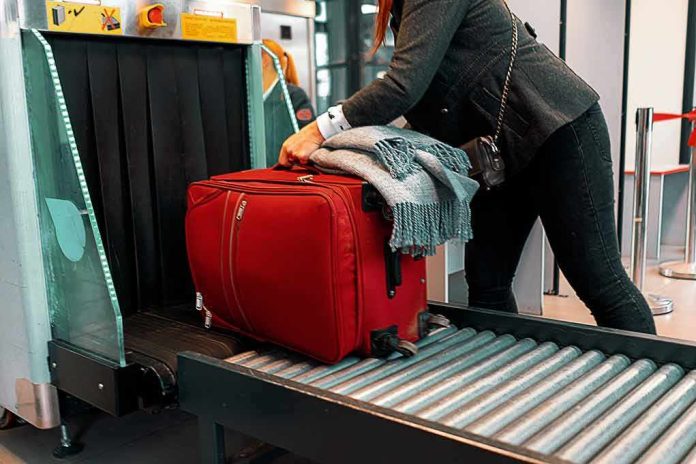
Transportation Security Administration officers at Ontario International Airport in Southern California flagged a checked bag after a screener spotted what looked like a rope in the image. The officer called a supervisor, who opened the bag and found two live snakes inside a pillowcase, with one described as a rattlesnake. Officers paused screening in the area, notified airport police and the airline, and treated the bag as a potential hazard until they could tell if the snakes were venomous.
The passenger told officials the snakes were pets and had flown before on another airline, according to the Los Angeles Transportation Security Administration Coordination Center as cited in the report. A family member who did not travel took the snakes. After removal, Transportation Security Administration staff rescreened the bag, cleared it, and the airline allowed the passenger to fly without the reptiles. No one was bitten, and airport operations outside the lane did not shut down.
What Rules Actually Say About Snakes On Planes
Airlines set their own animal policies, and federal guidance backs them up. The United States Department of Transportation states airlines are never required to accept snakes or other reptiles as service animals or pets. Many carriers ban snakes in the cabin. Some carriers may allow certain species in checked cargo, but only in approved containers with advance notice and paperwork. Transportation Security Administration officers focus on safety and security screening, then defer to airline rules for acceptance.
This case fits a rare pattern: someone tries to move a live animal in a bag that does not meet airline rules, Transportation Security Administration detects it, and the trip continues without the animal. Past cases include a four-foot boa constrictor found in a carry-on at Tampa International Airport in 2023; the airline refused the snake, and the traveler flew without it. In Hawaii in 2005, a live corn snake in checked baggage triggered a state fine due to strict local law.
Why This Discovery Matters For Travelers
Checked baggage screening is built to catch threats and odd shapes. A coiled body reads differently than clothing on an X-ray, which is why the officer caught the pillowcase bundle and escalated fast. The rapid pause protected travelers and staff until officers knew what they faced. That response aligns with common sense and conservative values: act first to protect people, then sort out paperwork and policy later. The system worked as designed, and the trip continued safely.
TSA officers at Ontario International Airport in Southern California discovered two live snakes, including a rattlesnake, concealed inside a pillowcase in a passenger’s checked luggage.
According to the agency, an officer initially mistook the snakes for rope before realizing… pic.twitter.com/qQ1j2zvYvx
— CBS News (@CBSNews) November 13, 2026
Travelers who keep exotic pets need to plan far ahead. Call the airline well before travel. Ask about species limits, container standards, and cargo rules. Bring documents. Tell Transportation Security Administration officers at the counter if a live animal is inside a checked container so they do not open it in a public lane. These steps prevent delays, reduce stress on the animal, and avoid a scene that forces police and supervisors to step in.
The Human Side Inside The Screening Lane
Transportation Security Administration personnel described the moment with blunt clarity: they did not know what kind of snakes they had and treated them as dangerous until proven otherwise. That mindset is the point of layered aviation security. Most bags carry shoes and shirts. Some bags do not. Training and teamwork fill that gap. A front-line screener spotted the odd shape. A supervisor slowed the lane and called help. Managers coordinated with police and the airline. Then, everyone went back to work.
Sources:
nypost.com, stcblink.nypost.com