Todd Blanche reached the top Justice Department job after a confirmation fight that turned on one question: could President Trump’s former lawyer convince enough skeptics that he would put the law ahead of loyalty?
Story Snapshot
- Blanche already had one Senate confirmation on his record, when lawmakers approved him as Deputy Attorney General in March 2025.
- His attorney general fight centered on a disputed $1.8 billion settlement, an “Anti-Weaponization Fund,” and tax-immunity terms tied to Trump and his family.
- The Senate Judiciary Committee advanced him on a 12-10 party-line vote after Blanche gave written assurances that “there is no Fund.”
- The full Senate then confirmed him 50-49, showing how narrow and political the final decision became.
The Deal That Almost Stopped Him
Blanche’s path to confirmation nearly collapsed over the settlement arrangement tied to Trump’s lawsuit against the Internal Revenue Service. Reporters said Republicans raised alarms about a proposed $1.8 billion compensation fund for people who claimed government persecution, along with tax protection language that covered Trump, his family, and Trump Organization entities. Blanche then wrote that the fund would not move forward and that the tax deal would be narrowed.
That written promise mattered because the Senate fight was not abstract. It was about whether the Justice Department was quietly blessing a political payoff dressed up as legal cleanup. Republican holdouts John Cornyn and Thom Tillis moved into support only after the department put its position in writing, and committee coverage said Blanche’s order stated “there is no Fund.” Once that happened, the committee advanced him.
Why Supporters Said He Was Qualified
Supporters could point to a hard credential that critics could not erase: Blanche had already been confirmed by the Senate for a senior Justice Department post. Congress records show the Senate confirmed him as Deputy Attorney General on March 5, 2025, by a 52-46 vote. The Judiciary Committee hearing also featured Grassley reminding him that the Senate had already judged his fitness for high office when it confirmed him as the department’s second-in-command.
That earlier vote gave Blanche a real advantage. He was not a fresh face plucked from nowhere. He had already passed one test in front of the same institution, and that mattered when Senate Republicans faced a choice between blocking a Trump loyalist or accepting a nominee with formal Justice Department experience. CNN and The New York Times both described him as Trump’s former lawyer, which made the loyalty debate unavoidable, but it did not erase the Senate record behind him.
Why Opponents Kept Fighting
Opponents did not need to prove a crime to make their case. They argued that Blanche’s close ties to Trump made him a poor fit to run the country’s main law enforcement agency. Coverage from The New York Times, CNN, and Reuters placed that concern at the center of the fight, especially because Blanche had represented Trump and had previously pledged to halt investigations similar to the ones that led to charges against him. That history fed the suspicion that his real client was still Trump.
Todd Blanche confirmed as the 88th US attorney general, 50-49, in a 4:17am vote. Collins and Murkowski broke ranks – and with McConnell absent, the deciding vote fell to Bill Cassidy, who just lost his own renomination to a Trump-backed challenger.https://t.co/qe2iJGDKyG
— Go Brief (@gobrief) August 8, 2026
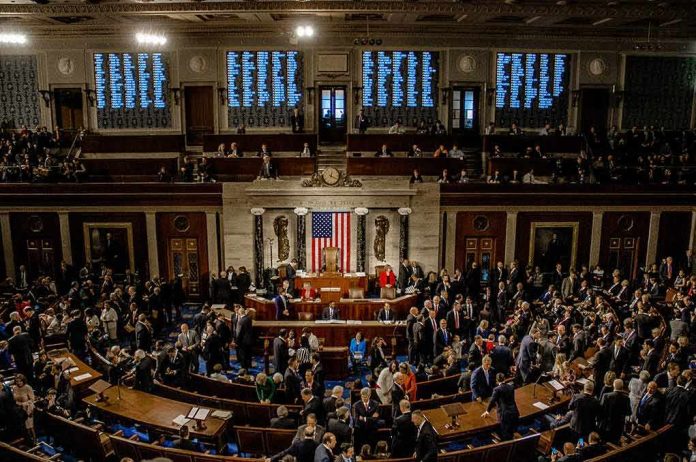
The Senate vote showed how deeply divided that suspicion remained. The Judiciary Committee advanced Blanche 12-10 on party lines, and the full Senate later confirmed him 50-49. That margin tells the story better than any speech. Blanche did not win a broad bipartisan embrace. He survived by a thread, after last-minute assurances, public pressure, and partisan loyalty all collided in one of the year’s most charged nomination fights.
Sources:
facebook.com, nytimes.com, congress.gov, abcnews.com, en.wikipedia.org, cnbc.com, theguardian.com, politico.com, pbs.org, judiciary.senate.gov