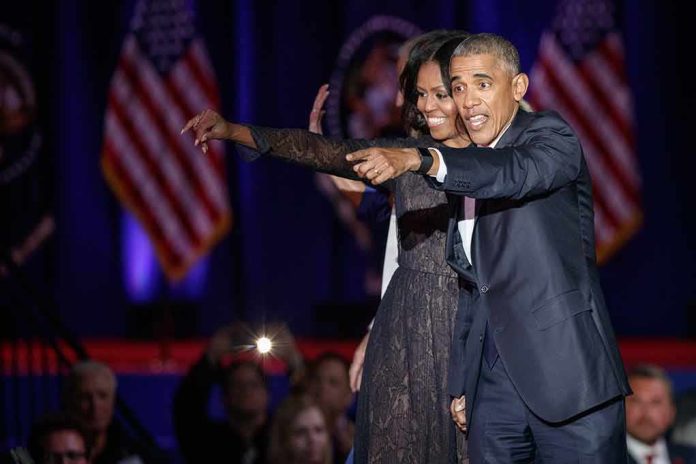
Barack Obama stepped back onto center stage to supercharge Senate Democrats’ cash and message days before voters cast midterm ballots.
Story Snapshot
- Obama headlined a Democratic Senatorial Campaign Committee fundraiser near Washington.
- The event focused on the stakes for Senate control and turnout this fall.
- Reporters billed it as Obama’s first DSCC fundraiser of this cycle.
- The party tapped a high-watt surrogate as Senate battles tighten.
What Happened And Why It Matters
Barack Obama headlined a Democratic Senatorial Campaign Committee fundraiser in the Washington area, with Senate Democrats gathered to frame the election stakes and pull in late cash weeks before the midterms. The committee uses these events to fuel ad buys, ground game, and legal operations in close states. NBC News reported this was Obama’s first fundraiser this cycle for the Senate campaign arm, timed for early October when undecided voters tune in and absentee ballots move.
The former president spoke about why the Senate map still hinges on turnout and candidate contrast, according to event summaries. The pitch targeted small-dollar givers and major donors who can fund rapid-response ads and get-out-the-vote pushes. That blend matters now. Competitive Senate races often swing on a few thousand votes. Money in October buys the last mile: field staff, mail, digital persuasion, and legal teams ready for close counts and recounts.
How Parties Use Ex-Presidents To Move Money And Message
Parties rely on well-known figures to break through noise and raise funds fast. Obama fits that role. He draws press, unlocks donor lists, and provides validators for nervous voters. This is not new. George W. Bush once toured for Senate Republicans; Obama has done the same for Democrats across cycles. The point is simple: move cash where it counts, when it counts, with a messenger who can keep attention in a crowded media moment.
The Democratic Senatorial Campaign Committee, like its Republican counterpart, centralizes late money to defend incumbents and press narrow openings. A New York Times analysis found Senate fundraising has surged since 2018, changing the scale and pace of late-campaign spending. The nationalization of Senate races continues as both parties chase small donors online while courting large checks to fund high-cost markets and legal prep.
The Strategic Timing: October Is Deployment Month
October fundraisers serve a concrete goal: fill the final budget for television and streaming, lock in field coverage for early vote windows, and surge late-deciders with sharp policy contrasts. NBC News framed this appearance as Obama’s first for the committee this cycle, which signals strategic reserve. Hold the marquee draw until the final weeks, then press the gas in states where polling and early vote data show a path to a one or two point edge.
Campaign veterans read these events like weather reports. A headliner this late means the party sees both risk and opportunity. The risk is donor fatigue and rising opposition cash. The opportunity is to ride any small polling lift into sustained momentum. For conservative readers, the lesson is familiar: Democrats invest early in digital and late in mass media; Republicans must answer with ground strength, disciplined messaging, and smart resource targeting.
What Obama Likely Delivered In The Room
Obama’s typical Senate pitch blends urgency with a menu of issues that activate base and swing voters: cost of living, health care security, and stability in national policy. The ask tends to be practical—fund organizers and ads now, before rates spike and inventory tightens. CBS News described the event as focused on the stakes of the upcoming election, consistent with how the party frames the Senate as a guardrail or greenlight for the next two years.
Obama hosts fundraiser with Senate Democrats with midterms less than 1 month away https://t.co/RrCu2u1pRy
— CBS News (@CBSNews) October 8, 2026
The host committee likely paired Obama with a Senate leader or a committee vice chair to anchor the conversation, a format that keeps donors close to operational details while using a national figure to set tone. That pairing meets two needs: inspiration from a trusted voice and confidence that dollars will land in the right districts, at the right hour, with measurable impact.
Bottom Line For The Final Weeks
Obama’s reentry underscores a nationalized Senate fight where late cash and famous validators still move the needle. Democrats believe a well-timed surge can harden soft support and flood key markets. Republicans know the counter: concentrate on turnout machines, inflation-focused messaging, and closing arguments on public safety and schools. The party that executes the last two weeks with discipline will likely control the Senate gavel. This fundraiser shows Democrats intend to sprint through the tape.
Sources:
cbsnews.com, wionews.com, obamawhitehouse.archives.gov