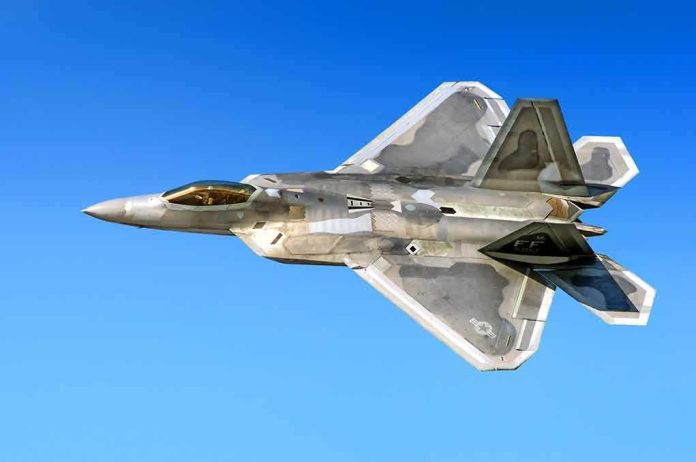
One hour in a U.S. Air Force F-22 Raptor can cost about $85,000, and the bill explains why America buys fewer of its best fighters than it flies of its good ones.
Story Snapshot
- The $85,325 per-hour figure comes from widely cited operating cost summaries.
- Official reimbursement schedules show lower rates because they count different things.
- Small fleet size, aging parts, and stealth upkeep drive costs higher.
- Taxpayers fund air superiority, but economics push missions to cheaper jets.
What the $85,325 number is, and what it is not
Popular press often quotes the F-22 at $85,325 per flight hour. That figure bundles fuel, maintenance, spares, and support, and it has become the headline for the jet’s burden on budgets. Defense accountants, however, publish separate “reimbursable rates” for when one agency bills another. Those rates for the F-22 in the current schedule land near the mid-$50,000s per hour, which do not include every sustainment dollar the fleet consumes. Different ledgers, different answers, same airplane.
The mismatch confuses readers but follows a normal pattern in military cost debates. Averages roll up across the fleet. Definitions vary by document. Some counts include depot work and base support; others exclude them. The $85,000 figure is best read as a broad operating cost benchmark used by media and many explainers. The reimbursable schedule is a billing tool. Both can be true at once because they serve different purposes.
Why the Raptor costs more than other front-line fighters
Fleet size is the first driver. The U.S. Air Force bought under 200 Raptors and retired some airframes. A small pool spreads fixed costs over fewer hours and cuts the benefits of scale. Export bans also mean no allied orders to share parts and upgrades. Suppliers make fewer components, and per-part prices rise. That is not a scandal; it is supply and demand. Big programs like the F-35 enjoy lower per-hour costs because thousands of jets and common parts flatten overhead.
Stealth maintenance is the second driver. The radar-absorbent coatings and tight surface tolerances take time, skill, and climate-controlled work. Media reports cite high maintenance hours per flight hour and the need for specialized processes and tooling. Every hour the coating team spends in a hangar is money. These realities are baked into the Raptor’s design era and mission demands, and they show up in the operating bill that many outlets quote at $85,000-plus per hour.
The number that shapes missions, not just headlines
Commanders care about cost per effect, not just cost per hour. An F-22 carries unmatched first-shot, first-kill power against top-end threats. But peacetime patrols, training hops, and routine intercepts do not always call for the world’s sharpest spear. Cheaper fighters can do those jobs well enough and save money for when stealth and sensor fusion matter most. That is responsible stewardship and lines up with a conservative view: match the tool to the task and guard the taxpayer.
Budget planners also watch readiness. A high per-hour cost can cut flying time, and flight hours make pilots sharp. The Air Force can preserve elite skill by shifting some sorties to lower-cost airframes while preserving F-22 hours for advanced training and combat trials. That trade looks dull on paper, but it protects the edge where it counts. It also buys calendar life for a small, precious fleet.
Two truths that explain the argument
Advocates who cite $85,325 per hour argue the Raptor strains sustainment and that the number dwarfs an F-16 or even an F-35 by two-to-four times. They point to delicate coatings, complex support gear, and thin parts pipelines that keep costs high year after year. Skeptics answer with official billing tables near $56,000 per hour and remind readers that some press figures mix in overhead beyond what a simple “one more hour” actually adds to cost. Both sides draw from real documents.
The clean read is this: the Raptor is more expensive to fly than other American fighters, no matter which ledger you use. The exact gap depends on what you count. Taxpayers fund air superiority so that, on the worst day, American pilots hold the sky and enemy pilots do not. But prudence says keep the Raptor for the fights only it can win, and let cheaper jets carry the daily load. That balance is common sense and sound defense economics.
Sources:
secure.afa.org, comptroller.war.gov, thepricer.org