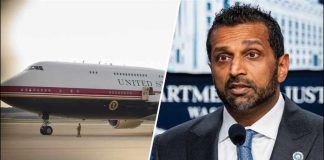
Within one week, three people died in ICE traffic stop operations — and President Trump’s response was not to pull back, but to order those stops to keep going.
Story Snapshot
- Trump called ICE traffic stops “one of ICE’s most important and effective crime-fighting tools” and reversed a nationwide pause.
- ICE had just halted most vehicle stops after fatal shootings in Maine and Texas and a deadly crash in Florida.
- Research shows ICE arrests have surged while the share of people with criminal or violent records has dropped sharply.
- Debate now centers on whether traffic stops fight crime, or simply fuel quotas, profiling, and deadly mistakes.
How a deadly week forced ICE to hit the brakes
Federal immigration agents saw three fatal incidents tied to vehicle stops in just days. Reports describe two shootings, in Maine and Texas, and a third death in Florida when a man fleeing an ICE encounter was hit by a truck. These events triggered internal guidance ordering most ICE Enforcement and Removal Operations agents to stop initiating vehicle traffic stops and rely instead on other tools like court arrests and detention transfers. Within law enforcement culture, a full stop on such a central tactic is extremely rare and signals serious concern about safety and judgment.
Local prosecutors in Texas opened criminal investigations, including possible murder and evidence tampering charges, highlighting sharp gaps between official accounts and what families and witnesses claimed happened. Media analysis noted that agents involved in the Maine and Texas shootings did not wear body cameras, even though Congress had approved twenty million dollars for that equipment months earlier. For older readers who remember “tough on crime” eras, this mix of deadly force, missing video, and rushed policy change feels familiar — and deeply unsettling.
Trump’s rapid reversal and the push to keep traffic stops
Within about a day of the pause, President Trump publicly stepped in. On camera and in posts, he argued the policy shift was a mistake and said, “We cannot give up one of ICE’s most important and effective crime-fighting tools, the traffic stop,” then directed agents to resume them. White House border adviser Tom Homan framed the pause as a brief safety review, not a change in strategy. Trump added that agents should be “judicious, fair, and smart” while continuing stops, but he did not lay out clear new rules, training, or metrics attached to that order.
Multiple federal sources told reporters that more than ninety percent of ICE arrests involved someone in or near a vehicle, showing how central stops have become to Trump’s enforcement push. From a common-sense conservative view, that level of reliance explains why the White House saw a halt as dangerous to border security. But it also exposes a problem: when one risky tactic dominates, any pattern of error or abuse will spread fast. Without detailed, public safety standards, slogans about being “judicious” sound more like politics than policy.
Does stopping cars actually catch dangerous criminals?
Here is where the numbers cut against the “crime-fighting tool” label. Independent analysis of ICE data shows that by October 2025, only about thirty-one percent of new detainees had any criminal conviction, down from roughly sixty-three percent around Trump’s first inauguration. A separate breakdown of ICE records found seventy-one percent of arrests in early October 2025 had no criminal convictions at all. Even fewer involved violent crime. In plain terms, as arrests went up, the share of truly dangerous people went down.
Broader studies on traffic and investigative stops echo the same pattern. A review of police stop research concluded that pretext stops — pulling drivers over mainly to look for other crimes — produce “abysmally low” rates of serious contraband or non-traffic crime and have no real effect on long-term crime trends. Major crime levels stayed flat while many cities cut back on stops. From a conservative, rule-of-law angle, that matters: government has a duty to use force where it clearly helps public safety, not simply where it is easier to rack up numbers.
Quotas, profiling, and the line between safety and overreach
Analysts tie Trump-era ICE tactics to a simple goal: more total arrests, fast. One report describes billions of dollars shifting into immigration enforcement while arrests of immigrants with violent convictions “flatlined,” blaming a “singular focus” on quotas. Another study finds that when ICE raises daily arrest targets, the share of people with criminal convictions drops; more peaceful workers and families end up in custody. That matches accounts of agents targeting people based on job sites, neighborhoods, and physical appearance rather than individualized evidence.
Trump reverse
DHS/ICE in under 24 hours.
After deadly shootings led to a temporary pause on most vehicle stops for immigration enforcement, President Trump directed ICE to resume traffic stops immediately. This will result in more deaths. pic.twitter.com/Olvth3VJ92— Ruben Garcia (@goRubenRuben) July 16, 2026
Legal experts emphasize that immigration agents can only stop vehicles when they have reasonable suspicion of a crime or immigration violation, except at limited border checkpoints. Race or ethnicity alone cannot legally justify a stop. Yet reports document routine vehicle stops and aggressive “at-large” operations where agents break car windows or confront drivers with little explanation. That mix of legal limits and field behavior raises a hard question for any citizen who cares about both security and the Constitution: when traffic stops become a mass deportation shortcut, are we still talking about law and order, or about unchecked government power?
Where a prudent, conservative approach would focus now
A careful, pro-safety, pro-border approach would not simply ban ICE traffic stops. There are times when stopping a car with a wanted gang member or cartel courier is necessary. But the facts argue for strict guardrails. First, the administration should release detailed data on how many traffic stops actually lead to arrests of violent offenders or seizure of serious contraband, and how many target people with no criminal record. Second, Congress and the public should see a clear plan to deploy body cameras, with serious penalties for any officer who disables or hides them.
Third, federal courts and lawmakers should insist ICE document reasonable suspicion for every stop and open that record to independent audit. If stops truly function as “important and effective crime-fighting tools,” that will show up in transparent numbers. If they mainly feed arrest quotas and racial profiling, that will show up too. In a country that values both strong borders and limited government, the right answer is not to trust slogans from either side. It is to demand that every traffic stop earn its risk in hard evidence, not in political talking points.
Sources:
nypost.com, pmc.ncbi.nlm.nih.gov, fbaum.unc.edu, nij.ojp.gov, marcelroman.com, brennancenter.org, policinginstitute.org, nytimes.com, youtube.com, borderlessmag.org, imba.missouri.edu