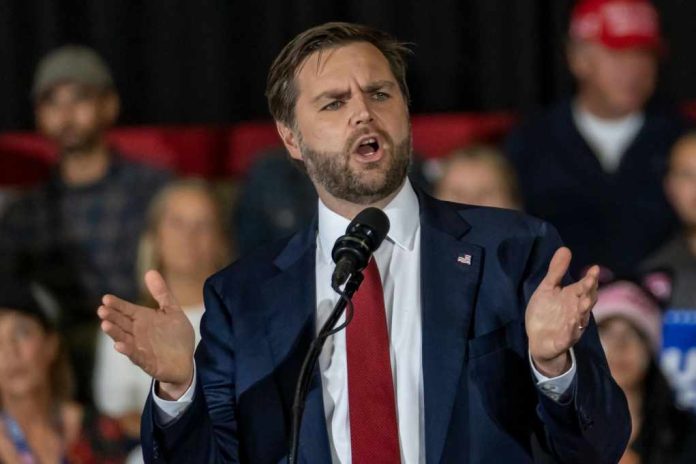
Vice President JD Vance says Republicans lost the 2026 midterms for one reason: the Iran war.
Story Snapshot
- Vance publicly blamed the Iran war for the GOP’s midterm defeats.
- He listed four voter priorities: end the war, tackle costs, put America First, and reset ties with Israel.
- He said many 2024 Trump-Vance voters switched to Democrats in 2026.
- He linked war-fueled oil prices to voter anger over living costs.
Vance’s On-The-Record Diagnosis Of The GOP Collapse
Vice President JD Vance posted on November 4, 2026, “The reason we lost is the war.” He tied Republican defeats to voter backlash over the Iran conflict and said many people who backed Trump and Vance in 2024 voted for Democrats in 2026. His message was blunt and specific. He argued voters punished the party for war costs and drift from an America First approach. He framed the losses as a warning, not a mystery, and called for a change in course.
Vance did more than vent. He offered a short list of voter priorities he says came through in polling and feedback. He named four: end the Iran war, fix the cost of living, put America First at home, and change the United States relationship with Israel. He said these points explained most of what frustrated voters told Republicans. He urged the party to respond in policy, not slogans, and to make clear choices voters can feel in their wallets and see on the world stage.
The Four-Point Plan And Why It Resonates
Vance’s first point starts with a clean exit from the Iran war. He argues war made daily life harder and split swing voters from the party. The second point hits the kitchen table. He links conflict to higher oil prices, which raised fuel and freight costs at a time families already felt squeezed. The third point leans on America First as a promise to rebuild strength at home. The fourth calls for a new approach to Israel, though he has not detailed policy terms.
Vance says this is not theory. He claims many Trump-Vance 2024 voters broke right at that hinge: war and wallets. That swing shaped the map, especially in districts where margins were tight. He argues a party that asks families to sacrifice abroad must be honest about the bill at home. He pushes for restraint that protects security and lowers prices. That stance tracks with conservative instincts on cost, clarity of mission, and accountability to voters.
Where Vance Parts Company And Where He Does Not
Coverage cast Vance’s stance as a break from the administration after the losses. Reports said he moved to distance himself from the conflict even as President Trump defended the policy while noting it was “part of” the result. That split is real as a message fight. But the overlap remains on core conservative ground: fewer open-ended wars, stronger borders, and a focus on costs for American families. The policy test will be what changes, not what labels win the headline.
COLLABORATION AND POWER STRUGGLES INSIDE TRUMP'S CAMP
According to Fox News, JD Vance is seeking to build a “new right” coalition among disillusioned Trump supporters following the Republicans' crushing midterm election defeat.
His strategy reportedly involves winning back… pic.twitter.com/qwazGQzzcO
— Rohoza (Дев'ятий) Mykhailo 🇺🇦🇱🇹🇨🇦 (@Oct7NeverForget) November 5, 2026
The plan’s strength is its clarity. End the war, ease prices, refocus at home, and set clear rules with allies. The question is execution. Voters will look for measurable steps: a timeline to wind down combat, energy moves that lower prices fast, and a written platform on the United States-Israel relationship that defines aid, arms, and goals. Midterms often punish the president’s party on their own, but Vance bets that war and cost shocks turned a penalty into a rout.
What To Watch Next
Three markers will show if Vance’s read sticks. First, whether the administration publishes a concrete path to end the war and prove it on the ground. Second, whether energy and shipping costs ease in ways families feel at the pump and grocery store. Third, whether Republicans put America First into bill text and budget lines, not just talking points. If those shifts happen, the voters Vance described may come back quickly in 2028.
Sources:
facebook.com, cbsnews.com, bbc.com, boston.com, cp24.com, lemonde.fr, nbcchicago.com