A classified warning tied the world’s top chipmaker to a suspected Chinese spy, and it reached the White House before a high-stakes trip.
Story Snapshot
- Officials received a classified memo alleging a Chinese intelligence link to a woman close to Nvidia’s chief executive.
- The memo reportedly relied on electronic surveillance, not rumor.
- Congress pressed Nvidia on safeguards and access to sensitive information.
- Nvidia opened an independent probe and said it saw no evidence of a compromise.
What Rubio’s Warning Said And Why It Landed With Force
Senior national security officials received a highly classified memo in spring 2026 that flagged Alice Huang as a Chinese intelligence asset who had grown close to Nvidia chief executive Jensen Huang, according to reporting attributed to people briefed on the matter. The assessment aimed at more than gossip. It reportedly drew on electronic surveillance tied to Alice Huang, who worked for a Singapore-based buyer of advanced Nvidia chips. The memo reached top policymakers before President Trump’s trip to China, which raised the stakes.
The alleged goal mapped cleanly onto Beijing’s interests: learn more about top U.S. artificial intelligence chips and shape availability to China’s market. That motive matters. Advanced chips are the new oil fields in the artificial intelligence era. Whoever controls the flow controls the future. Targeting the head of Nvidia would be a logical way to pry open windows that boardrooms and export rules try to keep shut. The account ties the personal to the strategic, which is why it drew attention.
The Commercial Trail That Made Spies Look Practical, Not Cinematic
Public reporting placed Alice Huang at a Singapore firm that bought Nvidia’s chips and faced scrutiny for possible illegal diversion to China. That link adds a shipping lane to the spy story. It suggests a path from pillow talk to pallets of hardware, if the allegations held up. The facts remain limited in public view. There is no released bill of lading, license file, or seizure record that nails down a smuggling chain. Nvidia has publicly rejected diversion claims as already debunked.
Even so, the broader backdrop is not friendly to denial. Independent researchers have traced routes that move restricted Nvidia chips into China through Southeast Asia and other stopovers. They identified dozens of shipments from 2023 to 2025 that point to ongoing workarounds. That does not prove a personal link caused any single shipment. It does show the market pulls hard enough to inspire creative, and sometimes illegal, paths. Pressure makes cracks. Cracks make leaks.
What Happened Next: Silence, Scrutiny, And A Corporate Firewall
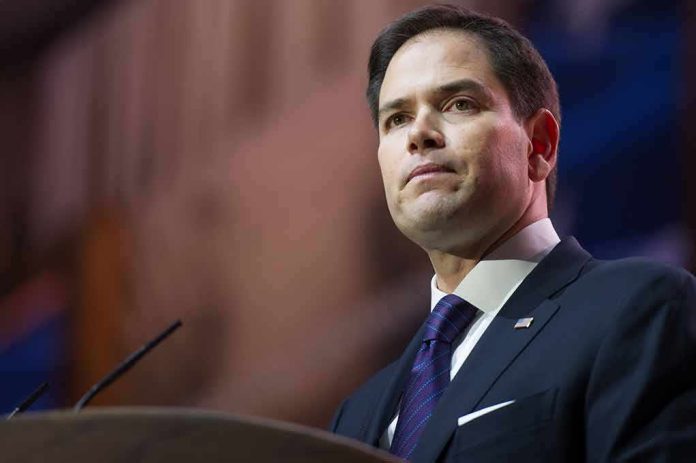
Reporters asked Secretary of State Marco Rubio whether the U.S. limited Jensen Huang’s access to government briefings after the memo. He declined to comment, citing sensitivity and corporate issues. That answer keeps the door closed on process but confirms the heat inside the room. On Capitol Hill, three Republican committee chairs sought a private briefing from Jensen Huang on his ties to Alice Huang and Nvidia’s controls on sensitive information. Congress cares when a crown jewel sits near foreign hands.
According to a report by The New York Times, Marco Rubio warned senior officials—prior to Donald Trump’s visit to China in May—that NVIDIA CEO Jensen Huang maintained a close relationship with a Chinese spy. This revelation raised concerns within the U.S. government regarding its…
— Xelon doge rugpuLl crypto charts+ GoLd silv (@queenandqueenie) November 9, 2026
Nvidia’s board announced an independent investigation once reports surfaced. The company said it had no reason to believe national security or company secrets were compromised, and Jensen Huang pledged full cooperation. That framing matches a responsible corporate posture: investigate, protect, and do not guess in public. From a common-sense, conservative lens, that is the right first step. You secure the perimeter before you issue speeches. You let facts, not spin, decide who needs a badge and who gets the boot.
What We Know, What We Do Not, And What To Watch
The memo itself remains classified, and the underlying surveillance remains unseen by the public. The press accounts cite people briefed, not named authors or declassified exhibits. That gap matters when drawing firm conclusions. The record does not show a single document, meeting note, or access log where Jensen Huang handed over sensitive data. It also does not show a policy shift caused by his relationship. Without that, the line between targeting and success stays dotted, not solid.
China denies the espionage claims as groundless. That denial changes little on its own; governments deny covert operations as a rule. The better barometer is whether U.S. agencies or Congress move toward formal findings. Watch for a declassified summary, a committee report, or enforcement tied to chip diversion. Also watch Nvidia’s controls: access segmentation, travel protocols, and tighter monitoring on executive devices. Real guardrails are not press releases. They are logs, audits, and revoked permissions.
The Stakes: Protect What You Build, Or Someone Else Will Use It
Advanced chips now sit at the heart of economic power and military edge. Protecting them is not anti-business; it is pro-freedom. The American playbook should be simple. First, insist on rigorous executive security hygiene inside firms that sit on strategic technology. Second, enforce export controls with teeth, including at the transshipment nodes that turn rules into jokes. Third, demand clear lines between profit in China and policy in Washington. Sell where allowed, but never on terms that sell out America.
Sources:
nytimes.com, seattletimes.com, bbc.com, news.sbs.co.kr, hinrichfoundation.com