A fast-growing Australian burrito chain just walked away from the world’s richest restaurant market overnight—and the reason says more about capital discipline than cilantro.
Story Snapshot
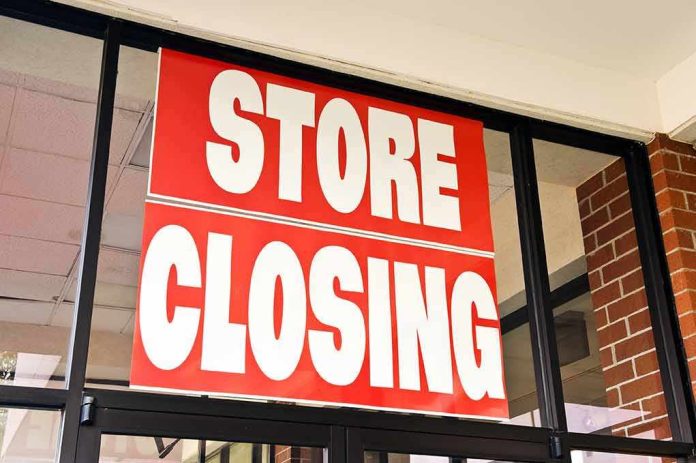
- Guzman y Gomez, a self-described Chipotle rival, shut every one of its eight U.S. restaurants in the Chicago area effective May 22.
- Management said bluntly that U.S. stores were not generating returns strong enough to justify more shareholder capital.
- The company chose a clean, total exit over a slow bleed of cash and “maybe someday” expansion dreams.
- The closure highlights how hard it is for foreign brands to crack the U.S., even in a cuisine Americans already love.
The abrupt end of a six‑year American burrito experiment
Guzman y Gomez arrived in the United States with swagger, talking about hundreds of locations and national footprint potential, and left with a simple website message: all U.S. restaurants permanently closed.[2] The chain spent six years in greater Chicago building to eight locations and then shut them all effective May 22, ending its American run in a single stroke.[1][2] Chicago guests woke up to find an entire brand vanished, not just a handful of weak stores.[1]
The company’s founder and chief executive officer, Steven Marks, described the call in stark business terms, not spin. He told Business News Australia that the board determined the U.S. business was not generating strong enough returns to justify continued investment of shareholder capital, and that it was unlikely to reach performance levels that would ever make the numbers work.[1][2] That is the language of a capital allocation memo, not a marketing apology, and it frames the move as a math problem, not a cultural clash.
Why a promising brand walked away from the world’s biggest stage
The menu was not the issue on paper. Guzman y Gomez served burritos, tacos, quesadillas, enchiladas, and breakfast burritos in a market that already devours Mexican fast-casual food.[1] Chipotle dominates that segment with roughly 4,000 restaurants nationwide, but that size also proves there is real American demand.[2] When a smaller rival pulls out completely, the obvious question is whether the problem was taste, execution, or tolerance for red ink while the brand found its footing.
Public reporting offers only a partial answer. Neither outlet provides audited store-level financials, same-store sales trends, or profitability by location.[1][2] What we have instead is management’s conclusion that returns were too weak and losses were dragging on group earnings.[1][2] An analyst cited by Fox Business called the early exit “positive” because the low-prospect U.S. business was weighing on results, and the market agreed; the company’s Australian stock price jumped after the shutdown announcement.[2] Investors rewarded discipline over American dreams.
Capital discipline versus the romance of “cracking America”
Many international executives treat entering the United States as a vanity milestone; Guzman y Gomez treated it like a spreadsheet. Marks said the business would have needed much more time and capital than originally planned, with no strong evidence that the payoff would justify pouring in more money.[1] For shareholders, that is the core conservative value question: should management chase prestige and scale, or cut off a weak limb to protect the healthy body?
Guzman y Gomez exits US 🌯 Chicago closures 🚪 Major blow to international growth — burrito dreams delayed. 😬
— Emmycruz (@0xEmmycruz) May 21, 2026
The board chose the latter, and that choice removed a challenger from Chipotle’s path.[2] Some observers will frame this as proof that large incumbents always win, but that ignores the more mundane explanation: rent, wages, marketing, supply chains, and training costs add up fast, especially in a new country. Without disclosure of unit volumes and margins, no one outside the boardroom can say whether site selection or operations could have saved Chicago.[1][2] What we can say is that patience is not free, and this board set a clear price.
The broader lesson for diners, investors, and would‑be disrupters
This story looks like a simple “Chipotle rival fails” headline, yet it fits a long pattern in cross-border restaurant expansion.[1] Companies fall in love with the size of the American market and underestimate the grind of winning customers one neighborhood at a time. When growth slows, the strongest brands protect balance sheets, not egos. Guzman y Gomez left an opening in Chicago, but it also signaled to its Australian investors that capital will not be sacrificed on the altar of American bragging rights.
Sources:
[1] Web – Chipotle rival closes all US restaurants
[2] Web – Popular international Mexican restaurant chain closes all US locations