

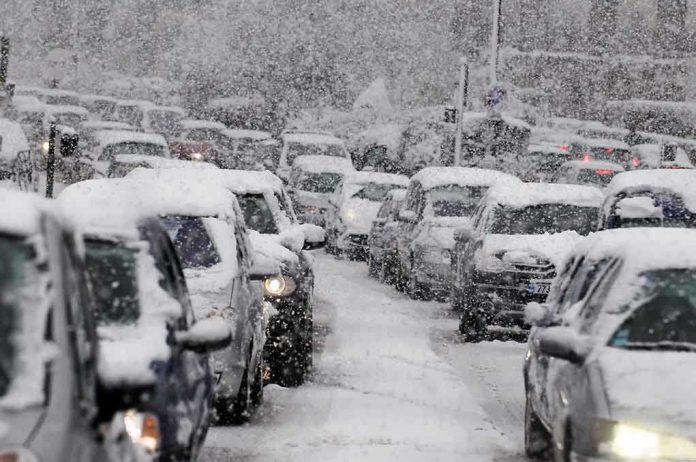
When a wall of white erased the highway in seconds, over 100 vehicles became metal dominos in a chain reaction that turned a Michigan interstate into what witnesses could only describe as absolute chaos.
Story Snapshot
- Over 100 vehicles, including 30-40 tractor-trailers, collided on I-196 in Ottawa County during sudden whiteout conditions on January 19, 2026
- Lake-effect snowstorm dropped 9 inches of snow while temperatures plunged to -40°F wind chills across the region
- Multiple injuries reported but all non-life-threatening; school buses evacuated stranded drivers from the crash scene
- The pileup occurred during a broader arctic blast affecting over 200 million Americans from the Great Lakes to Florida
- I-196 remained closed for hours near Zeeland Township and Hudsonville as emergency crews worked to clear the wreckage
The White Wall That Changed Everything
The crash began around 10:20 a.m. on a Monday that started like any other winter commute. Within minutes, Interstate 196 near Grand Rapids transformed into a disaster zone as lake-effect snow bands swept across the highway with zero warning. Visibility dropped to nothing. Drivers had no time to react. The first vehicles slowed, then stopped, then disappeared into the white. Behind them, semi-trucks carrying tons of freight couldn’t stop on ice-slicked pavement. The collision cascaded backward, vehicle after vehicle, metal crunching into metal, until more than 100 cars and trucks sat twisted across the eastbound lanes.
Chaos on the Ground
Stephanie Biesboer witnessed the aftermath firsthand and her description cut to the bone: absolute chaos. People stumbled through blinding snow trying to reach ambulances. Vehicles sat pushed off the road, some forced down embankments by the force of impact. Parents like Pamela Flowers received the call every mother dreads, learning their children were trapped somewhere in the tangle of wreckage. The scene stretched across both Zeeland Township and Hudsonville, a sprawling mess of commercial trucks and passenger vehicles that required school buses to evacuate the walking wounded and stranded drivers who couldn’t escape on their own.
The Michigan State Police shut down the entire stretch of I-196, blocking access while emergency crews picked through the destruction. Ottawa County Sheriff’s Office confirmed multiple injuries but delivered the one piece of good news: nobody died. In conditions this severe, with this many vehicles involved, that fact alone qualified as miraculous. The rescue effort stretched into the afternoon as tow trucks worked to separate twisted metal and clear a path through what looked like a junkyard dropped onto the interstate.
The Storm Behind the Wreckage
This wasn’t just a local weather hiccup. The pileup occurred during a massive arctic blast that punished over 200 million Americans with temperatures and conditions more suited to the North Pole than the continental United States. Lake-effect snow, that peculiar Great Lakes phenomenon where frigid air meets warmer lake water to produce intense, localized snowfall, dumped 9 inches in some areas. Wind chills plummeted to -40°F in northern regions. Detroit recorded -18°F wind chills. Even Florida’s Panhandle saw snow dusting, a detail that underscored just how far south this polar plunge reached.
CBS News meteorologist Rob Marciano tracked the storm’s path and urged Americans to take the threat seriously. The National Weather Service issued warnings for over 40 million people. New York Governor Kathy Hochul warned residents in western New York about similar risks on their roadways. The storm disrupted flights, closed schools, and created travel nightmares from the Midwest to the Northeast. The I-196 pileup became the most dramatic single incident in a week of weather-related chaos that touched nearly every corner of the nation.
When Weather Wins
By January 20, cleanup crews had cleared the wreckage from I-196 and reopened the highway. Roads remained snow-packed but traffic moved again, though few trucks braved the conditions immediately after. The frigid temperatures persisted, a reminder that winter hadn’t finished making its point. The economic toll extended beyond tow truck bills and insurance claims. Thirty to forty semi-trucks involved in the crash meant delayed deliveries, disrupted supply chains, and financial hits to trucking companies already operating on thin margins in winter conditions.
The human element cuts deeper than economics. Families separated during morning commutes didn’t know for hours whether their loved ones survived. Emergency services stretched to capacity dealing with injuries, evacuations, and the logistics of moving dozens of stranded people off a closed highway in subzero conditions. This pileup exposed the fundamental vulnerability every driver faces when nature decides to remind us who actually controls the roads. No amount of four-wheel drive or winter driving experience matters when visibility drops to zero and ice turns pavement into a skating rink at highway speeds.
Sources:
Fierce winter storm causes 100-car pileup, brings snow and deep freeze to Midwest, Northeast