Trump turned a policy speech into a map rewrite, pitching “Trump Strait” and “New America” without blinking.
Story Snapshot
- Trump proposed renaming the Strait of Hormuz as the “Trump Strait.”
- He floated calling the state of New Mexico “New America.”
- The remarks fit his broader naming playbook and branding style.
- Recent executive actions show he uses formal naming power elsewhere.
What Trump Said, And Why It Landed
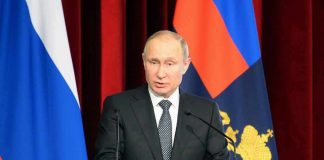
President Trump used his Republican National Committee stage to push two fresh labels. He asked if the Strait of Hormuz should become the “Trump Strait,” linking the idea to claims of United States “control.” He also suggested renaming New Mexico “New America,” and said people liked the idea. Both lines matched his habit of branding national strength through names and symbols, which he has done before in high-profile moments.
The Strait of Hormuz is a strategic choke point that carries a large share of global oil trade. Trump has described it as tied to American interests and security, and once referred to it as American territory in tone if not in law. His pitch to rename it sharpened that theme. The message was force: control the lane, claim the label. Reporters flagged the one-up style right away because it echoed his earlier nationalist framing.
“New America” And The Fifty-State Map
Trump’s “New America” tag for New Mexico played as a domestic mirror to the strait line. He showed a visual with the new name and repeated the phrase for effect. That suggestion touched a live wire because a state name ties to history, culture, and pride. The move was not a legal step. It was a rhetorical test balloon that fit his method: say it big, say it often, then watch who salutes and who fumes on camera.
Critics called the naming bits performative, but the delivery had a point. Trump treats names as tools. Names are short, sticky, and easy to share. They turn policy into a headline and a headline into a rally chant. That dynamic is why these riffs travel fast. Supporters hear resolve and identity. Opponents hear provocation. Either way, media outlets amplify the frame because the labels carry built-in conflict.
From Riff To Rule: The Formal Naming Track
The United States maintains an official naming process for domestic features. The United States Board on Geographic Names handles standardization across federal maps and documents. Presidents can shape this lane with orders that tell agencies which terms to use. Trump has already used that lever. He signed Executive Order 14172, which directed changes and set policy guidance on how the federal government handles geographic names. That order proves he blends rhetoric with formal action.
That blend matters for conservatives who prize clarity, sovereignty, and order. A nation that names its world in clear terms signals control. Federal uniformity reduces confusion. When Trump moves from microphone to memorandum, agencies update maps, databases, and signs. That does not redraw borders abroad. It does set the vocabulary that federal workers, contractors, and schools often adopt at scale. That is culture by bureaucratic pen, not just applause line.
What Sticks, What Signals, What Stops
Renaming New Mexico would require state and federal action far beyond a speech line. The United States government cannot unilaterally rename an international waterway for all parties either. But the United States can set its own usage on its own charts and systems. That is the distinction at the heart of Trump’s approach. He marks what he believes the United States owns, influences, or protects, then casts a label to match that claim of reach.
🚨Trump Proposes Renaming New Mexico ‘New America’
President Trump told the RNC Midterm Convention he wants New Mexico renamed New America, saying the people love the idea. He also proposed calling Lake Ontario Lake America and said the Pacific and Atlantic oceans could not both… https://t.co/dxzIfTZxiy pic.twitter.com/0Vsk8fQjtI
— Morse Report (@MorseReport) September 10, 2026
The short-term effect is narrative control. The long-term effect depends on whether an idea jumps to a directive. Past coverage shows how quickly these naming stories scale into global chatter, as with talk about the Gulf of America and other high-visibility names. The pattern is set: make a bold claim, force a debate over meaning, then decide if the White House will instruct agencies to lock the wording. That is how a quip can become a standard.
Sources:
youtube.com, nine.com.au, transcripts.cnn.com, congress.gov, wjcl.com, huffpost.com