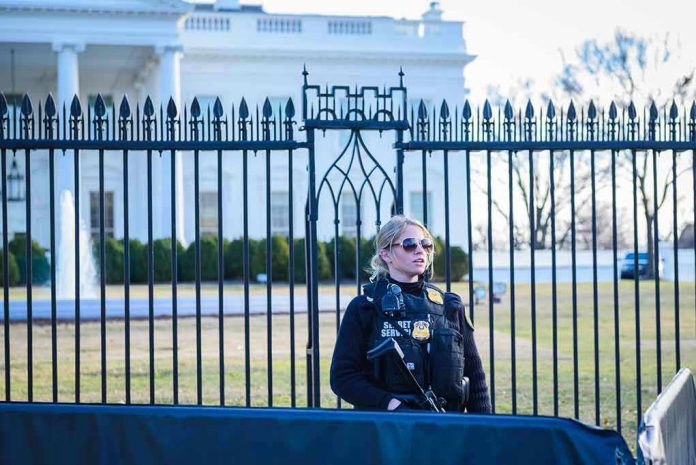
A security breach unfolded near the White House during King Charles III’s first state visit to America as monarch, exposing vulnerabilities in the protective ring around the nation’s most secured complex just days after an assassination attempt rattled Washington.
Story Snapshot
- Secret Service arrested a suspect Tuesday after a barrier breach near The Ellipse adjacent to the White House during King Charles III’s state visit
- The incident occurred days after gunman Cole Allen allegedly opened fire at the White House Correspondents’ Dinner in an attempted assassination of President Trump
- Enhanced security protocols including drones, special forces, and vehicle searches were already in place for the royal visit
- No weapons were confirmed and the suspect’s identity and motivation remain undisclosed as charges are pending
- The royal visit proceeded despite the breach and earlier shooting, highlighting security pressures in an unsettled Washington
Two Security Incidents Within Days
The Secret Service detained an unnamed individual Tuesday after the suspect bypassed a security barrier near President’s Park South, commonly known as The Ellipse. This park sits adjacent to the White House grounds where King Charles III and Queen Camilla were conducting their first state visit to the United States since Charles ascended to the throne. The timing proved particularly sensitive, coming just days after a California man allegedly fired shots at the White House Correspondents’ Dinner in an attempt to kill President Trump. Cole Allen, 31, from Torrance faces federal charges including attempted assassination, interstate gun transport, and discharging a firearm during a violent crime.
A Ring of Security Under Pressure
Security experts describe the protective measures for royal visits as a comprehensive “ring of security” involving drones, special forces, undercover agents, vehicle searches, crowd control barriers, and extensive barricading around potential target zones. These protocols aim to create multiple defensive layers preventing unauthorized access to protected individuals. Yet the Tuesday breach demonstrates that even enhanced security postures face challenges from determined individuals willing to test perimeters. The Secret Service spokesperson confirmed the arrest but declined to release details about whether weapons were involved or what motivated the suspect to attempt the breach during such a high-profile diplomatic event.
When Diplomatic Continuity Meets Security Concerns
Buckingham Palace and White House officials opted to proceed with the state visit despite the shooting at the Correspondents’ Dinner and subsequent security review. This decision reflects the diplomatic importance of the U.S.-U.K. alliance, even as both nations navigate political tensions and what observers describe as a turbulent Washington environment. The royal couple’s schedule continued with heightened alert levels but without public acknowledgment of altered plans. Decision-makers weighed the security risks against the signal that canceling would send about America’s ability to protect visiting heads of state. The calculation favored continuity, though undoubtedly with private concerns about the optics of two security incidents within a single week.
The barrier breach raises legitimate questions about resource allocation and planning capabilities within federal protective services. Department of Homeland Security funding issues have created pressures on agencies responsible for high-risk event protection, according to security analysts. Planning difficulties compound when incidents like the Correspondents’ Dinner shooting force last-minute security reassessments during already demanding protection assignments. The Secret Service faces scrutiny over whether current staffing levels and protocols adequately address evolving threats, particularly during overlapping high-profile events that strain available personnel and assets.
The Broader Picture of Protection Challenges
These back-to-back incidents illuminate systemic vulnerabilities in protecting both the presidency and visiting dignitaries. The economic impact remains relatively minor from increased security costs, but the social and political ramifications cut deeper. Public confidence erodes when breaches occur despite enhanced measures, and political figures face uncomfortable questions about whether protection standards match the threat environment. For the royals, the reinforced security ring proved sufficient to prevent direct danger, yet the breach itself confirms that determined individuals can penetrate outer defensive layers. Washington residents endured intensified vehicle searches and barricades, tangible reminders of the unsettled security climate.
US Secret Service arrests suspect after barrier breach near White House during King Charles' visit https://t.co/YV5zMhROyv #FoxNews
— 815wrldtrvlr (@815wrldtrvlr) April 29, 2026
The contrast between the two incidents deserves examination. Allen’s alleged shooting represented a direct violent assault with confirmed weapons and clear targeting of the president, resulting in evacuation and serious federal charges. Tuesday’s barrier breach involved no confirmed weapons and no apparent direct threat to the royals themselves, though the suspect’s undisclosed motivation leaves critical gaps in understanding intent. Both incidents, however, expose the challenge of maintaining secure perimeters in an era where threats can materialize from lone actors operating outside traditional security intelligence networks. The Secret Service demonstrated effective response in both cases through rapid detention, yet prevention remains the gold standard that twice faltered within days.
Sources:
King Charles US visit continues amid security tensions after Trump assassination attempt – 41NBC