A World Cup “fan zone” built to showcase global unity just became a crime scene that exposes America’s deeper struggle with violence and truth.
Story Snapshot
- One person was killed and another critically injured at San Jose’s World Cup fan zone.
- Police rushed to call it a homicide but released no suspect, motive, or victim details.
- The attack happened when no match was showing, raising questions about security and spin.
- The incident fits a wider pattern of host cities selling safety while managing bad news.
A deadly shooting in a place built for joy
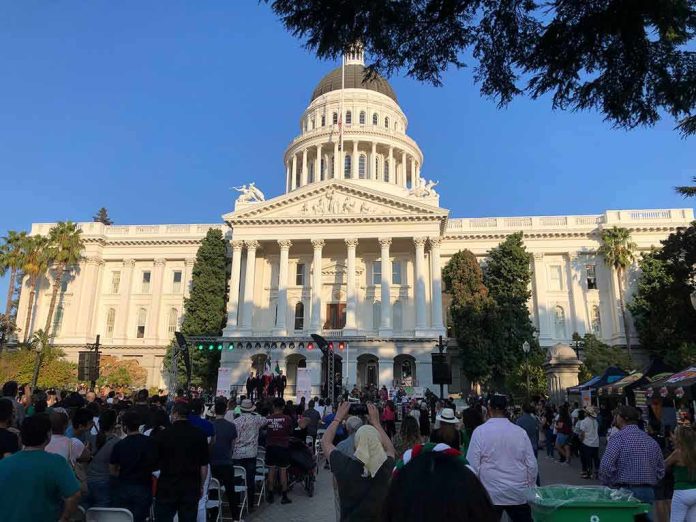
San Pedro Square in downtown San Jose was marketed as a safe, festive “Soccer Celebration” hub, with big screens, crowds, and sponsors promising one massive watch party.[6] Yet on Sunday, that same square saw gunfire that left one person dead at the scene and another fighting for life in a local hospital, according to police posts later echoed by major news outlets.[4] The victim who died never made it past the pavement. The second was rushed out under lights and sirens, with streets sealed off as officers locked down the area.[1]
San Jose police announced on the social platform X that they were treating the incident as a homicide.[1] That word matters. Homicide tells the public this was not random fireworks or an accident. It was a criminal act, by someone who pointed a gun with deadly intent. Yet, despite the weight of that label, authorities have not released a suspect description, an arrest, or any public theory of motive.[4] The fans, workers, and families who use that square are left with a verdict but almost no story.
The fan zone, the timing, and what police chose to say
Reports say no World Cup match was playing on the big screens when the shots were fired; the only game that day had wrapped hours earlier.[1] That detail is not small. It allows officials to say the attack was not directly tied to match emotions or crowd chaos. On paper, this was a shooting at a popular nightlife spot that also happens to host the official fan zone. That framing helps event organizers, sponsors, and the city argue that tournament operations are safe, even if the neighborhood clearly was not at that moment.[1]
Police confirmed that several surrounding streets were closed, and a Reuters reporter saw a heavy law enforcement presence, multiple vehicles, and a stretcher carrying a body partly covered by a white sheet.[1] Nearby bars shut their doors as the scene was taped off. A security guard who saw the wounded victim described them as clearly in distress, but she was not allowed to speak on the record.[1] These fragments give the feel of the event, but not its cause. The public sees flashing lights, not the chain of decisions that led to them.
What we still do not know and why that gap matters
Authorities have not released the names, ages, or backgrounds of the victims.[4] They have not shared witness statements, camera footage, or even a basic timeline beyond “Sunday.”[4] Without those facts, citizens cannot judge whether this was a targeted dispute, gang conflict, robbery gone wrong, or something closer to terrorism. American conservative values favor both law and order and personal responsibility; that mix demands clarity about who did what, and why, especially when government power is used to lock down city blocks and declare homicide.
One person killed and one injured in shooting at California World Cup ‘fan zone’ – The Guardian https://t.co/947VXKxtGQ
— AHRC-USA NGO in Consultative Status with ECOSOC-UN (@AHRCUSA) June 29, 2026
This silence creates space for doubt. Some locals may suspect that police and city leaders are more focused on calming headlines than on rapid transparency. That concern is not fantasy. Other World Cup host cities, like Kansas City and New York, have already seen high-profile shootings and stabbings near tournament sites, followed by tight official messaging that stresses isolated incidents and “no credible threats” to the games.[9] The pattern looks less like chaos and more like a communications playbook designed to protect tourism and future hosting rights.[8]
The bigger pattern: selling safety while managing violence
Data from Kansas City show a stubborn gun homicide rate that ranks among the worst in the country, even as leaders promise safe streets for visiting fans.[8] When nine people were shot along Troost Avenue in a weekend mass shooting, officials stressed their confidence in security plans and worked to shut down unlicensed venues, but arrests and clear answers lagged days behind.[10] In New York, six people were stabbed at Penn Station as the city hyped both the National Basketball Association finals and the World Cup, with officials rushing to assure everyone that victims would recover and that the suspect was in custody.[9]
These cases match what is now happening in San Jose: fast, firm crime labels; strong public claims of control; and thin early details about suspects and motives.[9] The story told to global audiences is simple: the World Cup is safe, American cities are prepared, and any violence is the work of “specific individuals” who will be handled. That may be true at the level of each event, but it can hide the deeper reality that host cities carry heavy, ongoing problems with guns, mental health, and social breakdown. Those problems do not shut off when the match clock starts.
Where common sense points next
Common sense says fans deserve more than polished statements and closed streets. They deserve basic facts. Who was killed at San Pedro Square, and why were they a target? Was the attack connected to the fan zone or simply nearby nightlife? Is the suspect at large, and what risk remains for people who still plan to watch games there this week?[1] American conservative instincts favor strong policing, but they also expect accountable government, not a one-way flow of carefully filtered social media posts.
Real accountability would mean releasing a full incident report once key investigative steps are secure: timeline, witness accounts, camera logs, and forensic findings that match bullets to weapons.[1] It would mean treating local families as stakeholders, not as a public relations problem to be managed until the cup moves on to another city. Until that happens, every chant of “we are safe” in a fan zone sits next to a darker question: safe enough for whom, and based on whose word?
Sources:
[1] YouTube – At least one killed in shooting at California World Cup fan zone
[4] YouTube – Deadly shooting near World Cup fan zone shocks California
[6] Web – One person was killed and another seriously injured on Sunday in a …
[8] Web – In the News: • Man dead, woman injured after shooting outside …
[9] Web – Violence erupted near World Cup watch party; SoCal man charged
[10] YouTube – Person injured in shooting near World Cup watch party in …