
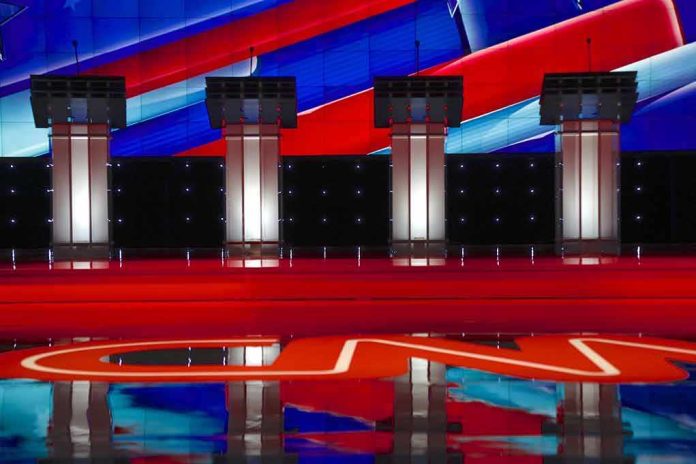
One line from the Michigan Senate debate cut through the chaos and defined the night: “not really a doctor.”
Story Snapshot
- A fiery first debate saw Mike Rogers and Abdul El-Sayed trade personal hits.
- Rogers drilled El-Sayed’s medical standing and Medicare for All costs.
- Charges of extremist ties and flip-flops raised the stakes and temperature.
- The race’s control-of-Senate frame amplified every punch and clip.
How the Debate Turned Into A Contest Of Identity
Mike Rogers centered the night on who Abdul El-Sayed is, not just what he wants to do. He said El-Sayed is “not really a doctor,” arguing that he lacks a license to treat patients in Michigan and would face legal trouble if he tried. That line was simple, repeatable, and sharp enough to survive the crosstalk. El-Sayed pushed back. But the label stuck to the moment and set up Rogers’ larger theme on trust and readiness.
Rogers paired that hit with a clear price tag on El-Sayed’s plan. He said Medicare for All would cost families “$20,000 a year” and end private insurance. That number will grab voters who know their monthly bills better than any white paper. El-Sayed defended his platform and dismissed the claim. The exchange gave Rogers the role of the bill-checker and cast El-Sayed as the risk-taker. Viewers heard a number, not a nuance.
The Attacks That Lit Up Post-Debate Coverage
Rogers went further, claiming El-Sayed took money linked to groups that support the Muslim Brotherhood and other terrorist organizations. PolitiFact reported Rogers also implied a family member may have been on a watch list. El-Sayed denied extremist ties and called such claims baseless. The charges are explosive, and they tend to dominate attention even when disputed. That is the harsh math of modern media. Voters remember the alarm, not the asterisk.
Rogers framed El-Sayed as a “policy lightweight” who shifts with the winds. He said people around El-Sayed admit he will say anything to get elected. El-Sayed fired back that Rogers flip-flopped on the Iran war and tariffs and only shifted when his poll numbers sagged. Both leaned into character. Neither ceded ground. But Rogers’ lines were tailored for highlight reels, which often decide what casual voters think they saw.
What El-Sayed Tried To Make The Night About
El-Sayed tried to pull the focus to costs that hit the kitchen table. He pressed Rogers on gas and groceries and called him a rubber stamp for President Trump. He called Rogers “weak” and “cowardly,” arguing that Rogers changes only when it helps him. That approach can rally a base that sees the race as a referendum on prices and national direction. But it competed with simpler, sharper claims that were easier to clip and share.
Michigan Senate debate erupts into personal attacks as Rogers, El-Sayed clash over Israel, Iran and more https://t.co/u6R1922u8r #FoxNews
— Tom (@thmsm74) October 9, 2026
The format itself rewarded confrontation. Reporters described the night as combative, with interruptions and personal jabs. At one point, the moderator pleaded for order. That kind of scene usually favors the side with tighter, preloaded lines. Rogers had several. El-Sayed had arguments, but fewer clean moments. Viewers likely left with impressions stamped by volume and velocity more than policy nuance. That is the nature of a one-hour, high-stakes fight.
The Stakes That Make Every Line Heavier
This is not just a Michigan race; it is a path to Senate control. National outlets set that frame well before the debate, which means every sound bite runs on a bigger stage. In that setting, the winner is the candidate who wins the recap. Rogers’ blend of identity hits and cost claims gave him a strong share of the next-day narrative. That does not prove vote movement. It does shape the conversation until the next test.
History says debate effects on votes can be small and short-lived. But strong moments can matter with undecided voters if they confirm a preexisting story. Rogers offered a simple story: El-Sayed’s plans cost too much, his credentials are thin, and his ties raise red flags. A conservative lens prizes competence, cost control, and national security vigilance. On those terms, Rogers’ case aligned with common sense concerns many voters bring to the booth.
What To Watch Before Calling It A Knockout
Two data points will tell us whether the hits land beyond headlines. First, post-debate shifts among undecided voters or late breakers in trustworthy polls. Second, money and volunteers in the 72 hours after the debate, which campaigns track closely. Coverage noted a second debate was already on the calendar, which limits any claim of a campaign-ending blow. Until numbers move, call this a narrative win for Rogers, not a final score.
Sources:
twitchy.com, newsnationnow.com, wlns.com, thehill.com, aljazeera.com, bridgemi.com, apnews.com