
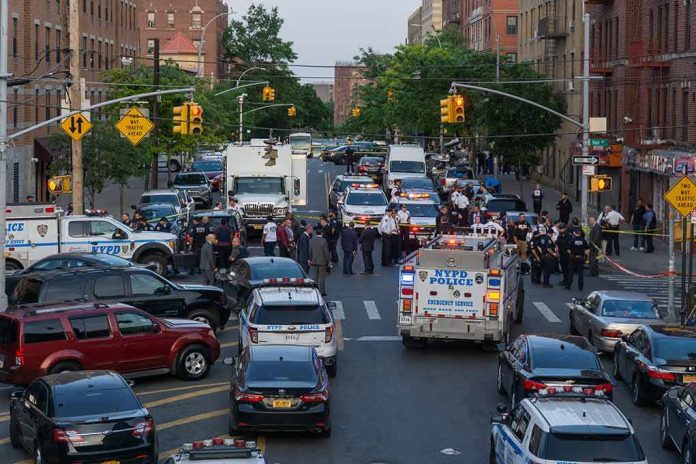
Two urgent 911 calls about a screaming person in a white van set off a chase that ended in fatal police gunfire on a Brooklyn highway.
Story Snapshot
- Two 911 callers reported a person yelling “Let me go” inside a white van.
- Police stopped the van on the Belt Parkway; the driver was shot and later died.
- Officers say pepper spray and a Taser failed before the driver rammed vehicles.
- Investigators found an adult woman from the van unharmed; a domestic dispute is suspected.
Two 911 calls and a white van on the move
New York Police Department dispatchers received two separate 911 calls around 7:19 p.m. reporting distress inside a white van near West 22nd Street and Surf Avenue in Brooklyn. One caller said a “girl” kicked and screamed. Another caller said they heard, “Let me go.” Officers broadcast the van’s description and moved to intercept on the Belt Parkway. The reports triggered a high-risk response because a moving vehicle with a distressed person can turn deadly fast.
Officers located the van on the eastbound Belt Parkway near the Coney Island Avenue exits and forced a stop as traffic tightened. Police approached, issued commands, and broke the front passenger window. According to the initial briefing, officers used pepper spray and a Taser, but both had little effect. The driver then used the van to ram nearby police and civilian cars, heightening the danger to everyone on the roadway, according to the department’s account.
Gunfire on the Belt Parkway and a rapid medical response
After the failed less-lethal attempts and the reported ramming, multiple officers fired at the driver. Police pulled him from the van, started CPR, and requested an ambulance. Medics took the man to NYU Langone Hospital—Brooklyn, where he was pronounced dead. The highway shut down for hours as investigators marked evidence and documented the scene. No officers were reported shot. The woman linked to the original 911 calls was found unharmed later that night.
The New York Police Department says body-worn camera recordings exist and will be part of the department’s Force Investigation Division review. The timing of commands, the use of pepper spray and the Taser, and the decision to fire are central to that review. The preliminary account emphasizes a step-by-step escalation and the use of the vehicle as a weapon, which aligns with standard policy on vehicle threats when bystanders face risk.
Why a van can become a weapon under the law
American case law treats a moving vehicle as a potential deadly weapon when it threatens others. The United States Supreme Court has held that officers may use deadly force to end a dangerous chase that puts innocent people at risk, even when that force risks serious harm to the driver. That principle guides highway stops where a suspect tries to break free and continue flight in traffic, as police described here.
🚨SHOCK FOOTAGE: NYPD officers fatally shot a 26-year-old kidnapping suspect on Saturday night in Brooklyn on the Belt Parkway near Coney Island Avenue after he rammed police cruisers and civilian vehicles while fleeing.
Police first used pepper spray and a Taser before opening… pic.twitter.com/DHi0C78XuD
— Moshe Schwartz (@YWNReporter) November 15, 2026
Reports note that officers believed the disturbance inside the van stemmed from a domestic dispute, not a child abduction. Callers used the word “girl,” but police later identified the involved person as an adult woman. Either way, the alerts describe a person in fear. Officers must act on the facts they face in real time, not on perfect hindsight. That is common sense and it protects victims who cannot wait while police sort every detail.
What the facts show and what comes next
The thread is clear. Two independent 911 calls reported a screaming person. Officers intercepted a matching white van on a busy highway. Commands, pepper spray, and a Taser came first, according to police. Shots followed only after the driver used the van against cars on the scene, as described by officials. The woman from the van was found unharmed. The Force Investigation Division will now test the timeline, tactics, and shots against body-camera video and roadway evidence.
Responsible policing under urgent pressure
Highway stops leave little room for error. A driver who tries to push past officers with a vehicle turns the car into force. When that happens, courts expect police to stop the threat fast. The New York Police Department’s account, if confirmed by video, fits that standard. The moral test is simple and conservative: protect the innocent, end the danger, and use only the force needed to do both. That is the job on the Belt Parkway and everywhere else.
Sources:
thegatewaypundit.com, nytimes.com, fox5ny.com, nbcnewyork.com, pix11.com, brooklyn.news12.com