A wingtip sliced into a cockpit on a crowded Miami taxiway while controllers said one jet should yield.
Story Snapshot
- The Federal Aviation Administration said a Copa 737’s wingtip struck a UPS 767’s nose while taxiing at Miami.
- Controllers told the UPS crew to give way to the Copa flight, according to the agency.
- Two people had minor injuries treated on site, according to airport responders cited in reports.
- The investigation is active; early reports placed the time around 9 to 9:15 p.m. on November 14.
What happened on the Miami taxiways
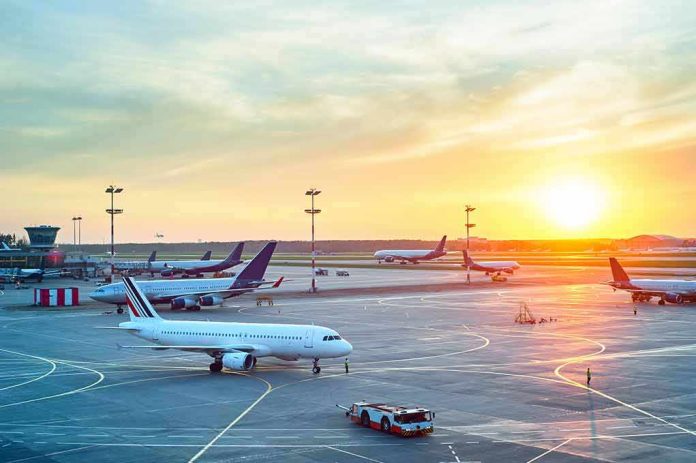
The Federal Aviation Administration said a Copa Airlines Boeing 737 wingtip contacted the nose of a United Parcel Service Boeing 767 as both taxied at Miami International Airport on November 14. The agency said the Copa jet was heading to a gate and the United Parcel Service jet was taxiing for departure to Bogota, Colombia. Controllers told the United Parcel Service crew to give way to the Copa flight, the agency said. The Federal Aviation Administration opened an investigation.
Reports from named outlets placed the collision near a taxiway intersection around 9 to 9:15 p.m. local time. The consistency across the Federal Aviation Administration, Cable News Network, and Reuters on the core point is clear: the Copa wingtip hit the United Parcel Service nose while on the ground at Miami. The scene was busy, with thousands of flights across the country delayed in the broader period, which shaped how travelers felt that night.
Injuries, damage, and immediate response
Airport and fire officials reported two people had minor injuries treated at the scene. No hospital transport was required, based on accounts cited by local and national outlets. The aircraft showed visible contact points: a clipped wingtip on the Copa jet and nose damage on the United Parcel Service jet, as described in multiple reports. Officials did not release a repair estimate or a formal airworthiness status that night. The Federal Aviation Administration’s review will document those details.
Operations teams separated and secured the aircraft, which is standard after a surface collision. Crews typically place chocks, inspect for fuel leaks, and lock out power sources before any tow. Passengers and crew on the Copa aircraft waited for direction, while the United Parcel Service flight stood down from its planned cargo run. Miami’s ground controllers continued to meter traffic around the closed area while safety teams documented the scene for investigators.
Why ground collisions happen at busy airports
Surface conflicts are a known aviation risk during taxi, when large jets move in tight spaces with limited margin. Investigators study crew navigation, controller workload, taxiway layout, lighting, paint markings, and alerting tech. The goal is to find how the pieces lined up, not to toss blame as a headline. Federal Aviation Administration safety programs track runway and taxiway risks across the system and target geometry hot spots for fixes such as clearer markings and better signs.
UPS CARGO PLANE AND COPA JET COLLIDE ON MIAMI TAXIWAY, TWO INJURED
A UPS Boeing 767 cargo plane and a Copa Airlines Boeing 737 passenger jet collided Saturday night at a taxiway intersection at Miami International Airport. Two people were treated for minor injuries and were not…— AmericaToday.com (@ATNewsChannel) November 16, 2026
Raw numbers show the base rate of surface risks. The Federal Aviation Administration’s Runway Incursion Mitigation program documented more than one thousand incursions in fiscal year 2025 across all categories, then flagged one hundred problem geometry locations for attention. Most events do not cause damage or injury. Miami’s contact stands out because metal met metal. That is the rare step from near-miss to actual strike, and it gets top priority in reviews.
What to watch next in the investigation
Expect investigators to line up air traffic control recordings, surface radar tracks, and crew statements. They will test whether the United Parcel Service crew had the position and space to yield as instructed, whether the Copa crew held centerline and speed, and whether signage, lighting, or congestion raised confusion. They will also measure sight lines from each cockpit. The Federal Aviation Administration’s formal findings will decide cause and recommend steps to prevent a repeat.
American common sense on safety and accountability
Clear orders, clear markings, and personal responsibility keep busy airports safe. The Federal Aviation Administration says controllers told the United Parcel Service jet to give way, which sets a simple standard that aligns with everyday traffic rules. Investigators will still weigh every factor, as they should in a fair process. When the facts are firm, the fixes should be direct: better geometry where needed, sharper training, and strict discipline when instructions are not followed.
Sources:
townhall.com, upi.com, edition.cnn.com, faa.gov, ntsb.gov