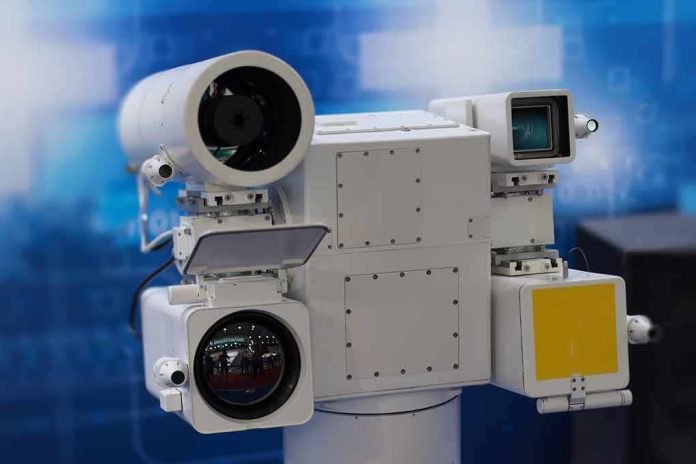
On Air Force One, President Trump said he likes Flock cameras because they help police catch criminals, and that single line may reshape the surveillance fight overnight.
Story Snapshot
- Trump said he likes Flock cameras for law enforcement value.
- Weeks earlier, he said the federal review was still underway.
- Police and vendors claim major case-solving benefits.
- Privacy critics call the system warrantless mass surveillance.
Trump Moves From “Studying It” To “I Like Them”
President Trump told reporters the government had been studying Flock cameras and that there are pros and cons. He said an answer would come soon. That was mid-August. By mid-September, he cut to the chase. He said, “I like them,” and tied that view to helping law enforcement catch suspects. The remarks were brief, but clear. Supporters heard a green light. Opponents heard the White House leaning into more road-side surveillance.
Trump’s comments did not cite case studies or audits. They read as executive instinct shaped by what he hears from cops. That is common in policing debates. Leaders often react to field feedback before formal memos land. The shift matters because it signals how agencies read the room. When a president says he likes a tool, procurement officers and city chiefs notice, even if the paperwork still says “under review”.
The Policing Pitch: Fast Hits, Stolen Cars, Missing People
Police departments say license plate readers help find wanted cars fast. They point to arrests after alerts ping stolen vehicles or felony warrants. Broad media coverage has repeated bold stats attributed to Flock’s footprint, including claims that the technology supports a large share of solved cases in partner areas. Public television reports describe a police-facing estimate that roughly one-fifth to one-quarter of reported crime sees some link to Flock data use.
These numbers sound big because they are. But they come through press summaries and vendor claims, not a single federal audit. Supporters argue common sense applies: a searchable log of plates on public roads turns luck into leads. That pitch fits conservative priorities. If a tool helps catch violent offenders and recover stolen property faster, the default should be yes, with guardrails. The burden should be on abusers, not on the tool itself.
The Privacy Case: A Dragnet That Remembers Everything
Critics warn these systems do not only scan suspects. They scan everyone who drives past. The data become a time map of daily life. Where you worship. Which clinic you visit. Who you meet and when. Civil-liberties advocates call that a warrantless dragnet that raises Fourth Amendment alarms. They say Americans should not trade their movements for a promise of safety, and they point to reported misuse by individual officers to stalk ex-partners as proof of the risk.
Courts have long said license plates in public are fair game. But modern systems store billions of scans and make them searchable across agencies. Legal scholars and some judges now ask a sharper question. When many cameras create a detailed history, does that become a search that needs limits or a warrant? That debate is not settled everywhere, and it will shape how far any national network can go without tighter rules.
What Trump’s Stance Signals For Policy And Politics
The administration’s posture hints at operational openness. Reporting on budget priorities said United States Park Police listed Flock cameras as a “nonnegotiable” item in a multi-million-dollar request, which suggests at least some agencies plan around this tech. That does not equal a national mandate. It does show where the momentum sits inside parts of government. Expect more pilots, faster procurement, and louder fights in city halls and statehouses.
'I like them': Trump backs Flock license plate cameras, but survey reveals 47% of US public opposes them as three police officers are arrested for alleged 'misuse' https://t.co/m2zodNarpr
— TechRadar (@techradar) September 14, 2026
Here is the sober way forward that fits law-and-order and liberty. Keep the tool, tighten the rules. Set short data retention by default, with extensions tied to active cases. Require supervisor sign-off for historical queries. Log every search. Notify when an error leads to a stop. Punish abuse fast and in public. These are not fig leaves; they are real friction that protects rights while letting good cops move. If those basics hold, Americans can have both safety and privacy.
Sources:
thegatewaypundit.com, usatoday.com, x.com, nypost.com, pbs.org, npr.org, abcnews.com, techcrunch.com